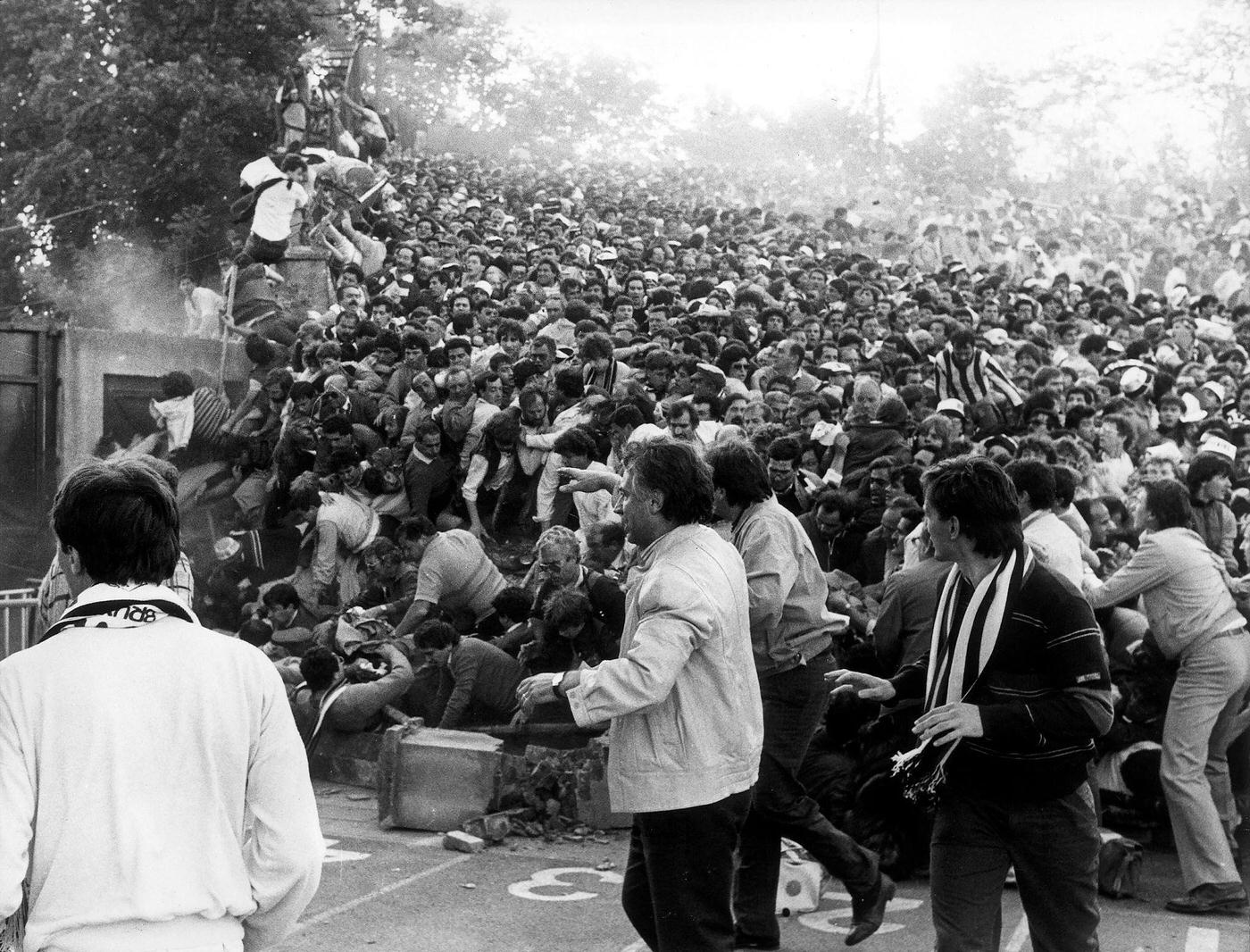
After the chaos of the 1985 Juventus vs. Liverpool match, a once-packed fan section is reduced to the mute evidence of what happened there: scattered rubbish, broken fragments, and an eerie absence where people had been moments before. The title’s focus on debris and trash in an empty block underlines a cruel contrast—football as mass celebration, then suddenly a space marked by abandonment and shock. Even without showing the full scale of the incident, the leftover clutter reads like a grim inventory of interrupted lives and a stadium’s lost innocence.
In the photograph, the crowd’s pressure and panic feel almost physical, with bodies pressed against barriers and others trying to climb away, while dust or haze hangs in the air. Faces blur into a dense human tide, and the eye is drawn to the hard edges of fencing and crumbling masonry—structures never meant to bear such force. It’s a stark reminder of how quickly a sporting event can tip from excitement into tragedy when control, safety, and space fail.
Remembered as the Heysel Stadium tragedy, the disaster left 39 dead and reshaped how authorities, clubs, and governing bodies approached crowd management and stadium safety. Images like this one remain essential to football history: they document not only the match but the consequences that followed for supporters and the sport’s culture across Europe. For readers searching Juventus vs. Liverpool 1985, Heysel disaster photos, or the aftermath inside the stands, this scene offers a sobering view of what “post-tragedy” truly looked like on the ground.