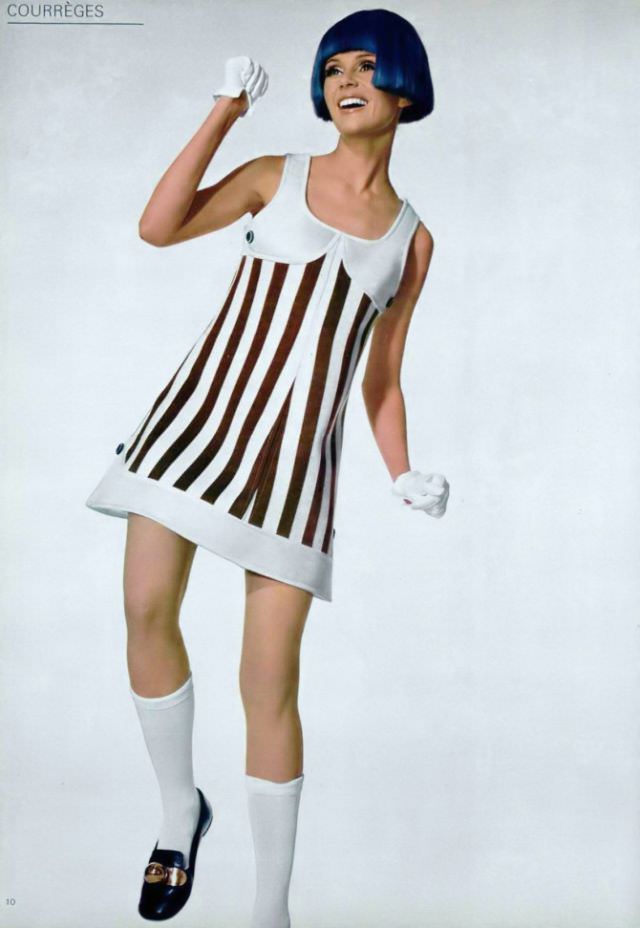
Nicole de la Marge beams mid-step in a graphic Courrèges mini dress, her pose as buoyant as the era that shaped it. Wide vertical stripes in deep brown play against crisp white panels, while oversized buttons and a clean, scooped neckline underline the label’s futuristic restraint. A blunt, glossy bob frames her face like a helmet—part mod fantasy, part space-age uniform—set against a stark studio background that keeps attention locked on silhouette and line.
Courrèges’ late-1960s language is written here in high contrast: geometry, movement, and a youthful, athletic ease that rejected fussy ornament. White gloves and knee-high socks sharpen the look into something deliberately polished, while dark loafers add a practical note, as if the outfit is meant for real streets rather than a purely editorial dream. The short hem and A-line cut speak to the liberation of the period, when fashion leaned into speed, modernity, and the thrill of new materials and new attitudes.
In the wider story of 1969 fashion and culture, images like this helped define how magazines sold modern life—bright, pared-back, and confidently forward-looking. Nicole de la Marge’s open smile and animated stance turn the dress into an argument for optimism, a wearable manifesto for the mod and space-age styles that dominated late-’60s Paris fashion. For anyone searching Courrèges 1969, vintage French model editorials, or striped mod mini dress inspiration, this photograph remains a vivid snapshot of the decade’s sleek, upbeat design vocabulary.