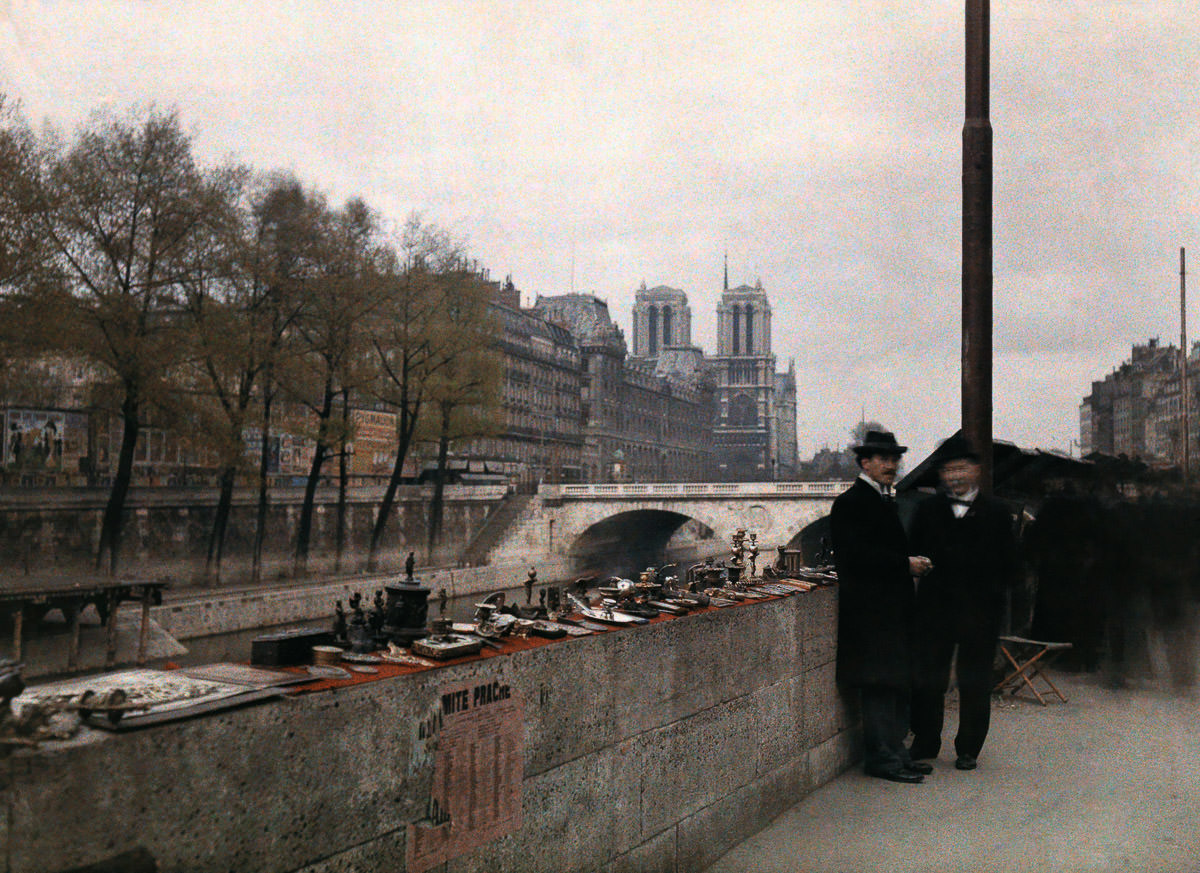
Along the Seine, Paris feels both grand and intimate at once—stone embankments, bare-limbed trees, and the steady span of a river bridge guiding the eye toward the unmistakable twin towers of Notre-Dame in the distance. The colorization softens the city’s geometry into a lived-in palette: muted skies, weathered masonry, and the gentle haze that often hangs over a busy riverside. Even without pinpointing a street name, the scene anchors you firmly in 1920s Paris, where everyday movement unfolded beneath monumental architecture.
In the foreground, a small outdoor market hugs the parapet, its wares laid out in neat rows—metal objects and curios that catch what little light the day offers. Two men in dark coats and brimmed hats linger near a lamppost, half-posed and half-caught mid-conversation, while a cluster of umbrellas suggests vendors prepared for drizzle or simply shielding their tables. Details like the posted notice on the wall and the scatter of items along the edge give the photograph a documentary feel, a glimpse of commerce that was ordinary then and fascinating now.
Colorization adds a particular kind of immediacy to historical photos, pulling the 1920s out of abstraction and into something closer to memory. The subdued tones highlight textures—river stone, ironwork, damp air—while keeping the mood appropriately restrained for a Parisian riverside day. For anyone searching for “Paris 1920s” imagery, vintage street life, or Notre-Dame views from the Seine, this restored scene offers a richly atmospheric window into the city between tradition and modernity.