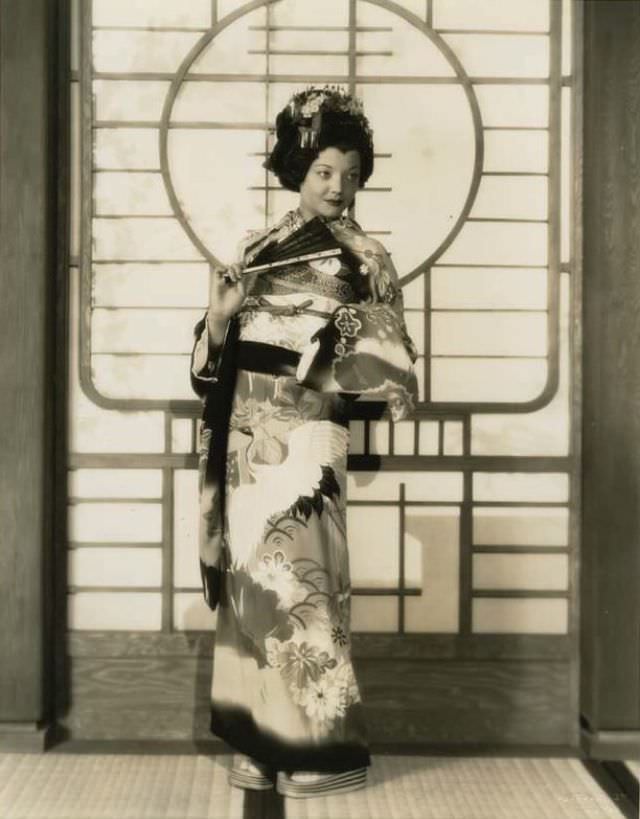
Framed by a bold circular window motif, Sylvia Sidney stands poised in an ornate kimono, a folded fan lifted as if to punctuate a line or conceal a fleeting emotion. The patterned fabric—birds in flight and floral bursts—reads beautifully even in monochrome, while the carefully styled hair and delicate accessories signal a studio’s meticulous attention to period atmosphere. Behind her, the geometric grid of the set creates a theatrical sense of depth, turning a simple pose into a composed moment of screen drama.
Released in 1932, “Madame Butterfly” belongs to an era when Hollywood leaned heavily on stylized design to conjure faraway worlds, and the result is on full display here. The staging suggests an interior defined by shoji-like panels and symmetrical framing, echoing the film industry’s fascination with visual elegance and stage-influenced composition. Sidney’s controlled posture and sidelong gaze hint at performance as much as costume—an interplay of gesture, silhouette, and storytelling that silent-era traditions carried into early sound cinema.
For readers browsing classic Movies & TV history, this photo offers a striking entry point into discussions of adaptation, star image, and the aesthetics of early 1930s filmmaking. Searchers looking for Sylvia Sidney, “Madame Butterfly” (1932), or Golden Age Hollywood imagery will recognize the blend of glamour and theatrical craft that studios used to market prestige productions. Whether you’re collecting vintage film stills or exploring how cinema shaped cultural fantasies, the scene lingers as a carefully arranged portrait of screen presence.