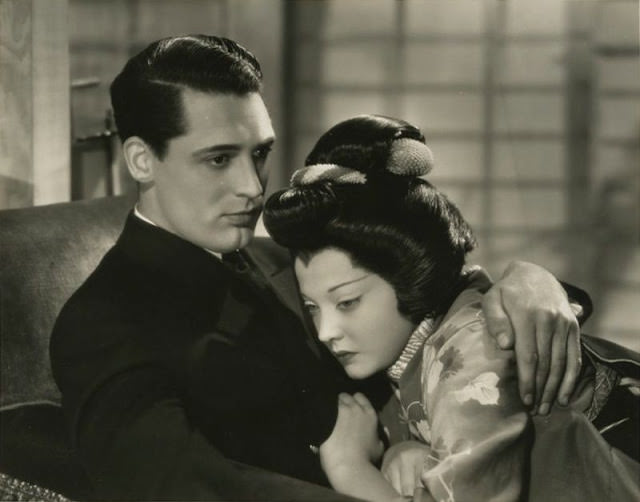
Tenderness and restraint define this publicity still from the 1932 screen version of “Madame Butterfly,” where Sylvia Sidney’s portrayal leans into quiet heartbreak rather than melodrama. The camera lingers on an intimate embrace: a Western-suited man holds her close while she turns inward, her gaze lowered, as if already feeling the weight of what cannot be said. With its soft lighting and carefully staged closeness, the image evokes the era’s fascination with romantic tragedy and the emotional power of early talkies.
Costume and styling do much of the storytelling here, from the patterned kimono to the sculpted coiffure that signals a carefully constructed role within Hollywood’s period “exotic” aesthetic. Sidney’s expression is the anchor—delicate, guarded, and intensely human—suggesting vulnerability beneath formality. The set behind them remains blurred and domestic, keeping the focus on the couple’s tension and the fragile calm of a scene poised on the edge of loss.
Fans of classic cinema and Movies & TV history will find this photograph a compelling window into how studios sold drama in the early 1930s: through emotion, proximity, and star presence. The still invites a closer look at performance as much as plot, hinting at the nuanced acting style that made Sidney memorable in an era transitioning from silent-era poses to more naturalistic screen feeling. As a shareable piece of film history, it’s an evocative reminder of how one look and one embrace could carry an entire story.