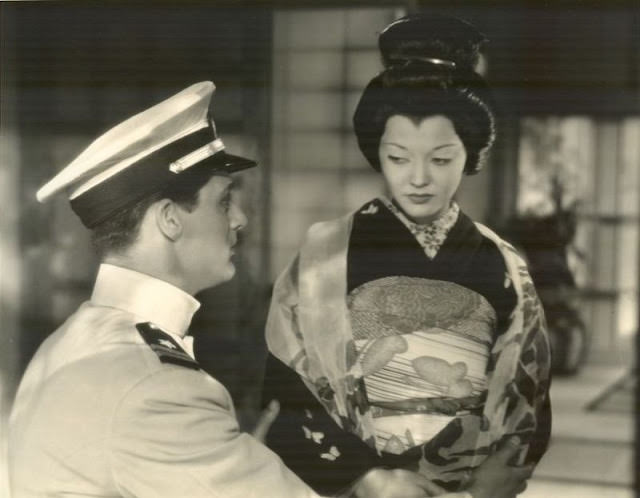
Poised between intimacy and formality, Sylvia Sidney appears in an elegantly patterned kimono, her gaze turned downward as a uniformed naval officer faces her in profile. The soft studio lighting and gentle blur of the set behind them create a hushed, theatrical atmosphere, drawing attention to the quiet tension in their body language. Details like her carefully arranged hair ornaments and the crisp lines of his cap help evoke the cross-cultural world suggested by “Madame Butterfly,” a story long associated with longing, duty, and irreversible choices.
Released in 1932, this film-era moment reflects Hollywood’s fascination with stage-to-screen prestige and emotionally charged melodrama. Sidney’s expression here—controlled, contemplative, and guarded—hints at the kind of performance that lives in small gestures rather than grand declarations. For readers searching classic cinema, early sound film history, or Sylvia Sidney photos, the scene offers a striking visual entry point into how Movies & TV once staged romance and tragedy with a careful balance of spectacle and restraint.
Alongside its dramatic appeal, the photograph is also a time capsule of production design: layered textiles, polished uniform trim, and a set dressed to suggest refined interiors without overwhelming the actors’ faces. The composition keeps the conversation—spoken or unspoken—at the center, letting the viewer imagine what has just been said and what may follow. Whether you’re revisiting “Madame Butterfly” on screen or exploring Hollywood history through iconic stills, this image invites a closer look at Sidney’s screen presence and the era’s enduring storytelling style.