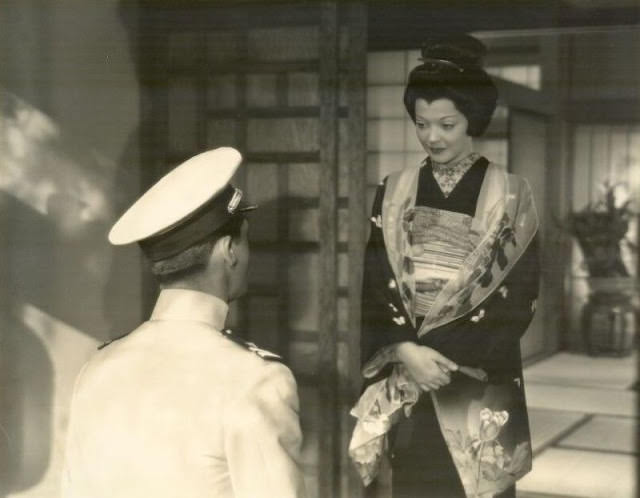
Grace and restraint meet at the threshold of a Japanese-style interior, where Sylvia Sidney—costumed in an ornate kimono with a carefully arranged coiffure—faces a uniformed man whose cap and crisp jacket signal authority and distance. The staging is intimate yet formal: she stands with hands gathered, gaze lowered, while he sits or kneels with his back to the camera, making their imbalance of perspective part of the drama. Sliding doors, patterned textiles, and soft studio lighting set a mood that feels both theatrical and quietly tense, the kind of visual storytelling early sound cinema handled with deliberate care.
Released in 1932, “Madame Butterfly” arrived in a period when Hollywood was fascinated by stories of cross-cultural romance and tragedy, often filtered through the era’s own assumptions and stage traditions. The scene’s meticulous costume and set design aim for atmosphere and pageantry, while the actors’ composed body language suggests a conversation loaded with consequences. Even without dialogue, the still conveys a familiar theme of the “Madame Butterfly” narrative—devotion, waiting, and the shadow of power—rendered in the polished style of classic studio filmmaking.
For fans searching for Sylvia Sidney “Madame Butterfly” 1932 photos, classic Movies & TV history, or early Hollywood performance stills, this image offers a vivid window into how the film sold emotion through posture, wardrobe, and framing. The contrast between her embroidered elegance and his stark uniform creates a memorable visual shorthand for longing versus duty. Seen today, it invites both admiration for its craftsmanship and reflection on how the screen imagined cultural worlds during the early 1930s.