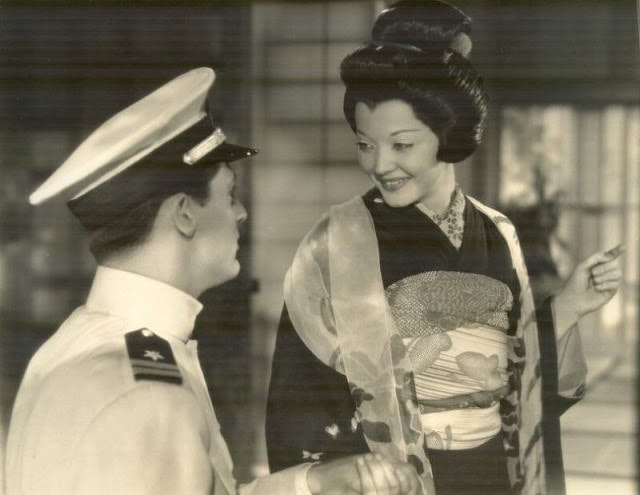
A poised exchange unfolds between a woman in a patterned kimono and a uniformed naval officer, staged against the clean lines of a Japanese-style interior. Her carefully arranged hair, soft smile, and the drape of the robe draw the eye, while the officer’s crisp cap and insignia signal duty and distance. The composition leans into contrast—silk and metal, intimacy and formality—suggesting the delicate emotional balance at the heart of “Madame Butterfly.”
In the context of 1932 Movies & TV, the scene evokes an era when Hollywood leaned heavily on theatrical sets and expressive costuming to carry story and mood. The lighting and close staging emphasize faces and gesture, letting a simple turn of the head or a raised hand imply longing, persuasion, or quiet resolve. Even without dialogue, the moment reads as a meeting loaded with consequence, the kind of intimate pause that classic cinema used to make audiences hold their breath.
For readers searching Sylvia Sidney and “Madame Butterfly” 1932, this photo works as a vivid doorway into early screen performance and studio-era visual storytelling. It highlights how character could be communicated through posture, fabric, and the symbolic weight of uniforms, all framed within a carefully controlled space. Whether you’re exploring Hollywood history, classic film stills, or the legacy of “Madame Butterfly” on screen, the image offers a memorable glimpse of romance and tension rendered in timeless monochrome.