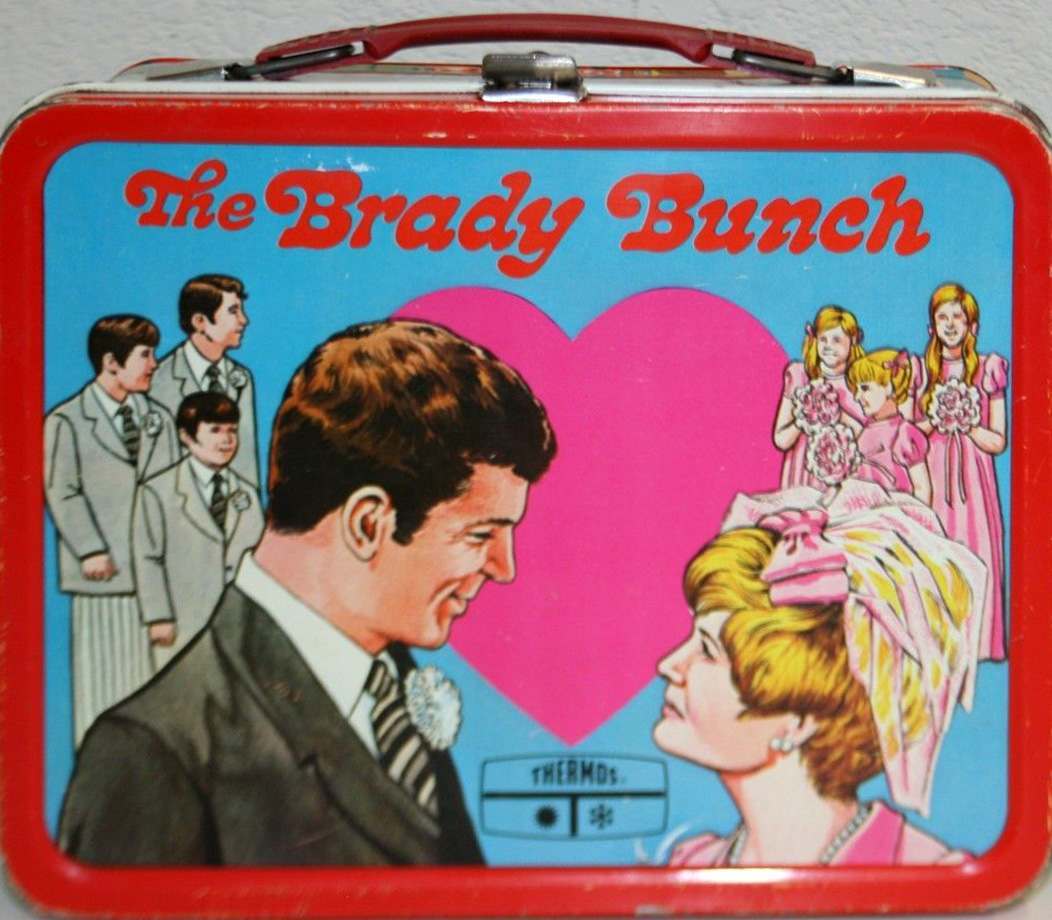
Bright red trim, a hard metal shell, and that unmistakable title—“The Brady Bunch”—turn an everyday lunch carrier into a billboard for a kid’s TV loyalties. The artwork leans into soap-opera sweetness with a heart-shaped backdrop and a wedding scene, the kind of earnest illustration that once felt perfectly normal in the aisle of a department store. Even the little “THERMOS” label down front hints at the ritual of matching your lunchbox to your drink bottle, as if coordination itself could buy a little confidence.
Schoolyard status in the 1970s often traveled by handle, clanking down hallways and landing on cafeteria tables with a metallic thud. A lunchbox like this could make you instantly legible to classmates—safe, square, or secretly proud—depending on what was “in” that week and who was doing the teasing. Pop culture branding didn’t just sell containers; it sold belonging, and it also handed bullies a convenient target when your choice drifted outside whatever the cool kids had decided was acceptable.
Nostalgia hits hardest in the small details: the scuffs around the edges, the bold primary colors, and the way a simple object could spark friendships or embarrassment before the first bite of sandwich. For anyone searching for 1970s lunchboxes, metal lunchbox memories, or the strange social economy of the cafeteria, this image is a time capsule of childhood politics. It’s funny now, but it also reminds us how much meaning we once packed into something meant to hold peanut butter and an apple.