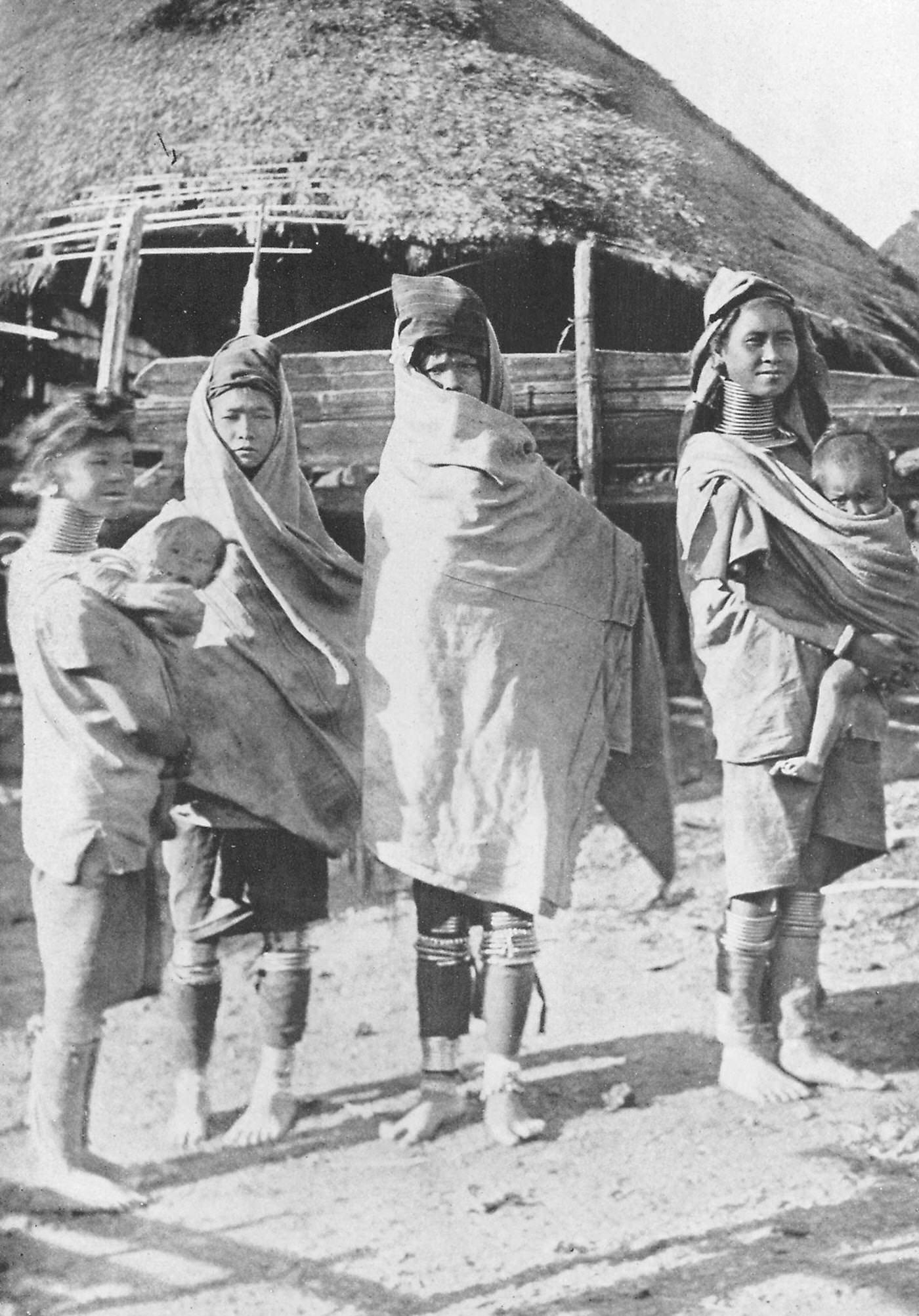
Four Padaung (Kayan Lahwi) women stand in a row outdoors, wrapped against the chill in layered cloth that reads like both blanket and garment. Each figure is swathed differently—one with a hooded wrap framing her face, another with a shawl drawn tight—turning the scene into an informal display of cold-weather clothing rather than a posed studio portrait. Two infants rest in slings at their mothers’ sides, grounding the moment in everyday life even as the camera invites a closer look at fabric, fit, and custom.
The most striking visual detail is the metal neck coils worn by the women, paired with additional bands at the legs, their bright rings catching the light in contrast to the matte textiles. These adornments, so often reduced to a sensational shorthand, appear here alongside practical choices: sturdy wraps, head coverings, and bare feet on hard ground, suggesting a routine adaptation to climate and work. Clothing and body ornamentation mingle as markers of identity and tradition, but also as part of a complete, lived wardrobe.
Behind them rises a large thatched structure, its broad roofline and wooden supports hinting at village architecture in Myanmar’s upland regions without pinning the scene to a specific settlement. The photograph’s documentary tone—plain background, direct stances, unembellished setting—makes it valuable for anyone searching for early 20th-century Myanmar history, Kayan culture, or Indigenous fashion and textiles. Seen through this lens, the image becomes less a curiosity and more a textured record of community, motherhood, and material culture in 1922.