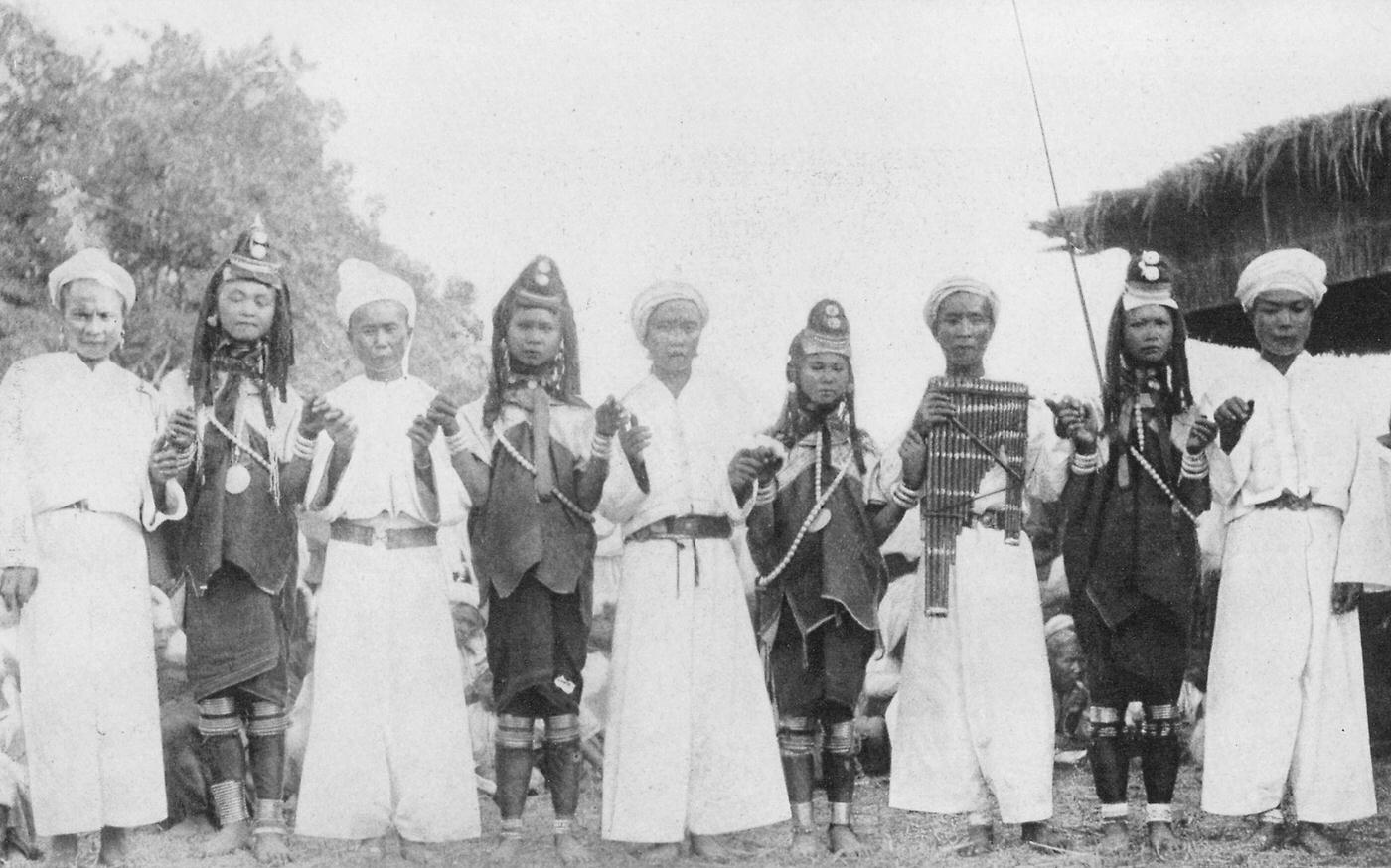
Linked hand to hand, a line of dancers stands before the camera, their bodies held in a poised stillness that hints at movement just paused. Dark, fitted garments and ornate headdresses distinguish several performers, while others wear pale, wrapped clothing and head coverings that read as formal and ceremonial. At shin and knee level, stacked metal rings catch the light, and layered necklaces and pendants add to the rhythmic, patterned look of the group.
What draws the eye is the careful contrast of textures—smooth white cloth against darker woven fabric, beads and metalwork against bare arms, and the repeated bands of jewelry that punctuate each figure. One performer carries a striking chest-hung array of vertical pipes or bars, suggesting a musical element alongside the dance, and together the costumes and objects signal a tradition meant to be seen as well as heard. The faint crowd behind them and a thatched roof at the right edge place the scene outdoors, where community gatherings commonly unfolded.
Taken in Myanmar in 1922, the photograph offers an evocative glimpse into Padaung (Kayan Lahwi) cultural expression at a moment when outside lenses often lingered on “neck rings” and other adornments. Yet beyond the fascination with jewelry, the image preserves a social choreography—people aligned in solidarity, dressed with intention, ready to perform. For readers searching fashion history and Southeast Asian culture, it stands as a valuable record of traditional clothing, dance, and identity in early twentieth-century Myanmar.