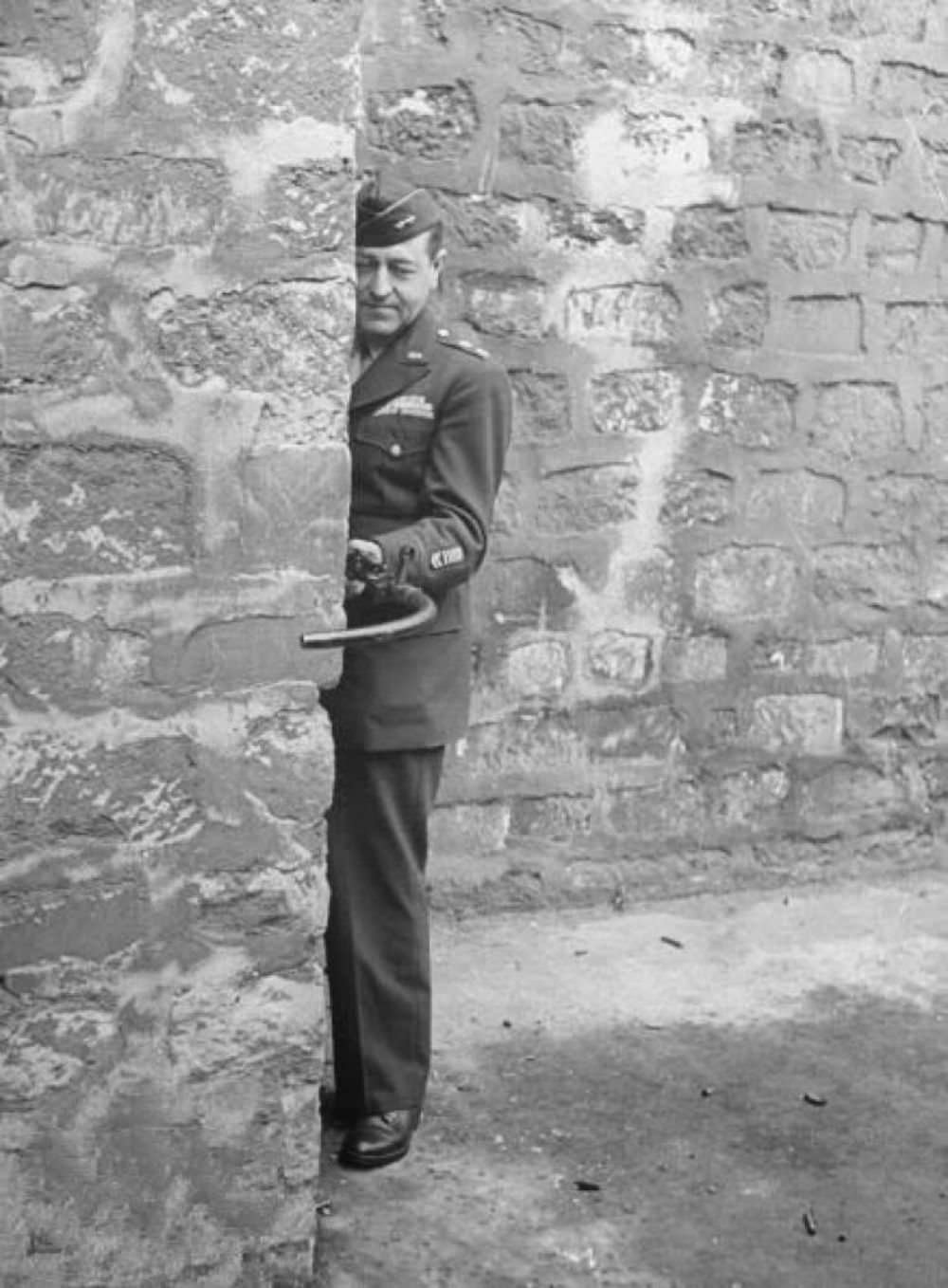
Half-hidden behind a rough stone corner, a uniformed soldier demonstrates a weapon fitted with a conspicuously curved barrel attachment, the odd bend jutting out like a piece of improvised plumbing. The setting feels stark and practical—bare ground, heavy masonry, and the tight angles of a built-up area where “seeing” around a corner could mean everything. Even without captions, the photo’s message is clear: wartime inventiveness wasn’t confined to laboratories; it was tested in the very geometry of streets and walls.
The post title points to the Krummlauf, a WWII-era attempt to make bullets “bend” by redirecting a rifle’s muzzle so a shooter could fire from cover. In theory, a curved barrel attachment promised a way to engage targets without exposing the body—an attractive idea for close-quarters fighting and urban combat. In practice, the physics were unforgiving: redirected projectiles, punishing stress on the metal, limited accuracy, and rapid wear turned a clever concept into an engineering compromise.
Seen today, this historical photo belongs to the broader story of World War II inventions—bold, sometimes desperate, and often fascinating precisely because they sit on the edge between ingenuity and impracticality. It invites modern readers to look past the myth of “wonder weapons” and consider the daily problems soldiers and designers were trying to solve: cover, angles, and survival. If you’re researching WWII experimental weapons, curved barrel firearms, or the Krummlauf’s place in military history, this image offers a striking starting point.