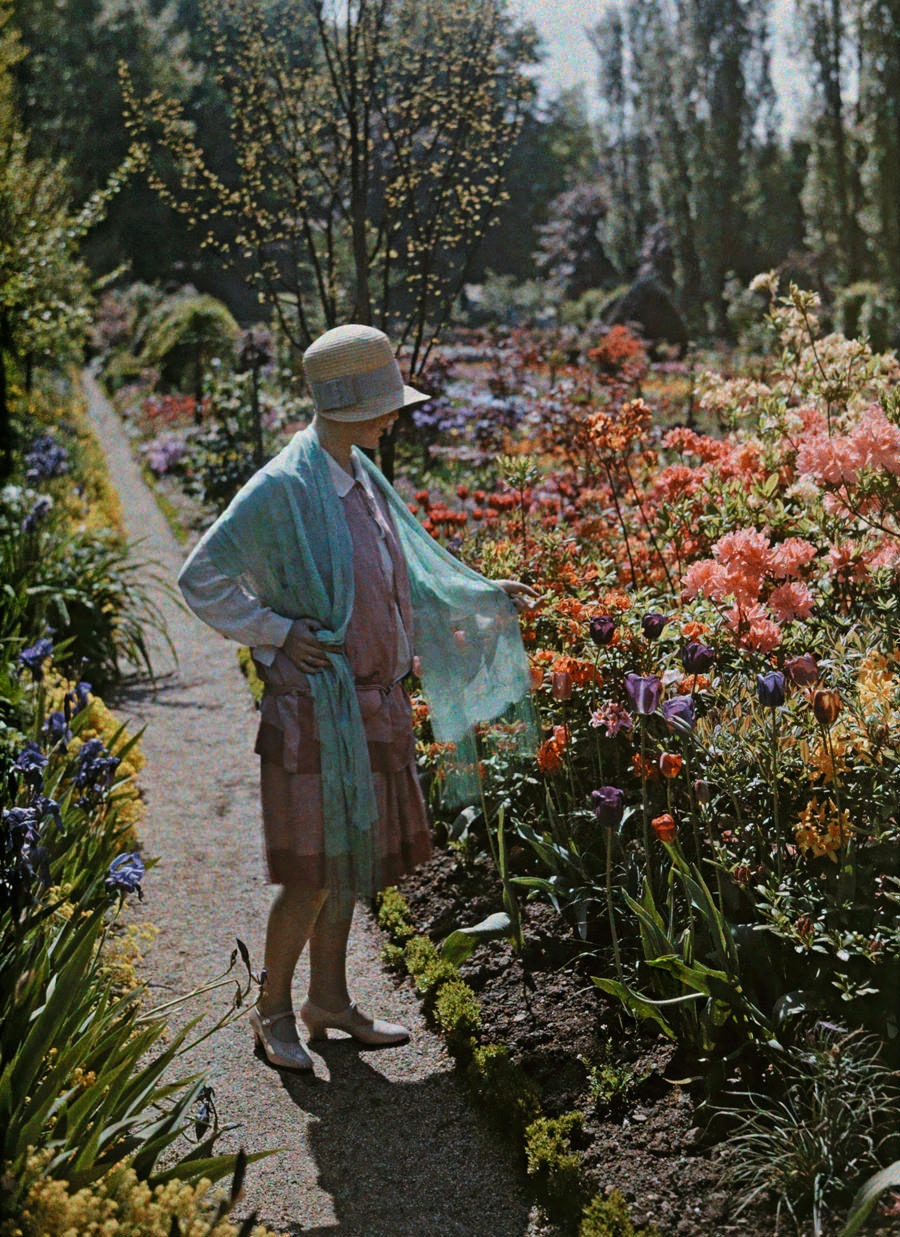
Early summer light spills across a Baden garden in Germany as a young woman pauses at the edge of a crowded flowerbed, absorbed in the colors and textures of the blossoms. The scene feels carefully tended yet unforced: a narrow gravel path curves past dense plantings, while taller trees and shrubs soften the background into a cool, green haze. In the foreground, warm pinks and reds mingle with purples and fresh spring greens, turning an ordinary stroll into a small, private moment of appreciation.
Her clothing places the viewer firmly in the late 1920s, when everyday fashion balanced ease with polish. A close-fitting cloche hat shades her face, and a light, airy scarf—caught mid-drape—adds movement and a whisper of elegance over a simple dress and low-heeled shoes. Rather than formal portraiture, the posture and setting suggest leisure and modernity: a woman comfortably at home outdoors, enjoying a cultivated landscape and the season’s peak bloom.
What makes this 1928 garden photograph so compelling is its sense of lived color—soft, slightly grainy, and unmistakably of its era—bringing Weimar-era domestic culture into view without spectacle. Garden history, women’s fashion, and the rhythms of middle-class recreation meet here in one quiet frame: a walk among tulips and flowering shrubs, a pause beside the border, and the timeless act of stopping to admire what’s growing. For readers interested in Germany in the 1920s, vintage style, or the everyday beauty preserved by early color photography, this image offers a vivid, intimate window into the past.