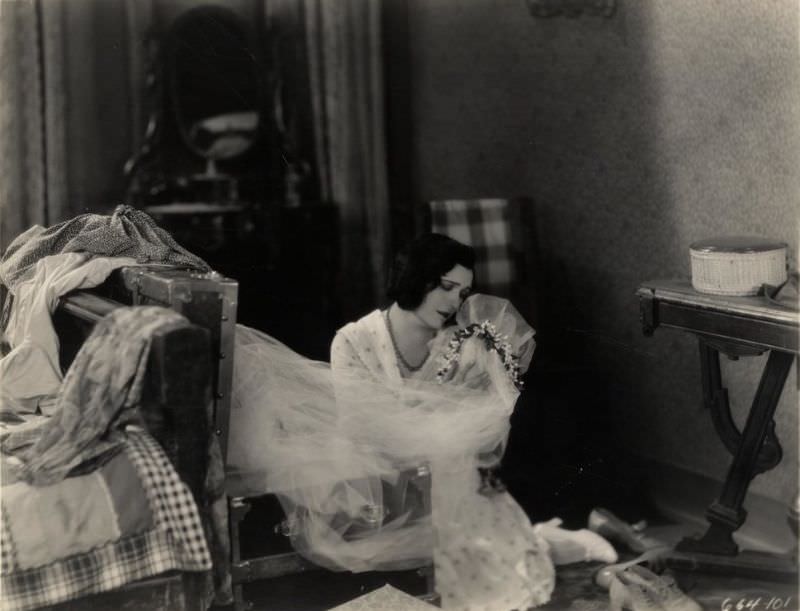
A hush hangs over the room as a young woman in a patterned nightdress sits on the floor, her face turned toward a lace-trimmed veil or delicate fabric gathered in her hands. The bed beside her is unmade and cluttered with clothing, and a small trunk or case rests near the frame, suggesting a life in transition—arrivals and departures measured in belongings. In the background, a softly lit washstand and mirror fade into shadow, while a side table with a round container anchors the right edge of the scene, giving this still the lived-in texture of a private interior.
The title, “The Secret Hour (1928),” feels uncannily appropriate for such an intimate moment: the kind of quiet interval silent-era filmmakers loved, where emotion is carried by posture, light, and a single meaningful object. Rather than spectacle, the camera lingers on domestic detail—the rumpled textiles, the gauzy layers, the calm but heavy stillness—inviting viewers to read the story between the folds. It’s a snapshot of early cinema’s visual language, when mood and character were built through careful staging and expressive restraint.
For collectors and film history enthusiasts, this historical photo offers a compelling window into 1920s movies and TV culture, capturing the period’s fascination with romance, secrecy, and the fragile line between public roles and private feeling. The soft focus and tonal range emphasize atmosphere over clarity, reinforcing the sense of memory and longing that often defines iconic silent film imagery. Whether you’re researching classic cinema or simply drawn to evocative vintage stills, this post preserves a small, telling fragment of “The Secret Hour” and the era that shaped it.