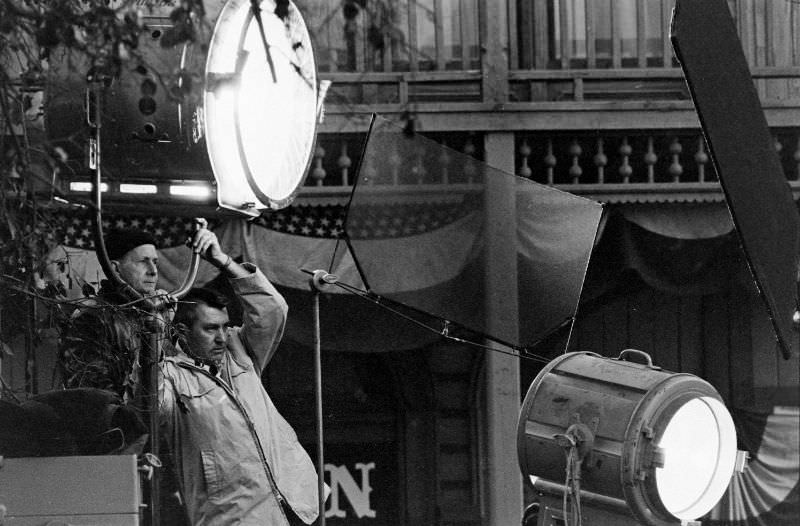
Overhead, a bright studio lamp hangs like a small moon while two crewmen steady cables and metal supports on the Universal lot in Hollywood, 1963. The scene is all practical problem‑solving—hands on hardware, eyes on the light—capturing the quiet precision that made mid‑century movies and TV look effortless on screen. In the background, draped bunting and architectural details hint at a staged street or set façade waiting to be brought to life.
Behind every glamorous close‑up sat the reality of heavy fixtures, improvised rigging, and constant adjustments to tame shadows and glare. The large Fresnel-style light at the lower right, paired with a reflector or flag, suggests the careful sculpting of illumination that defined classic studio cinematography. Even in a single frame, you can sense the choreography of a working backlot: equipment positioned, angles tested, and a crew moving in sync with the needs of the shot.
Hollywood’s Golden Age may be remembered for stars, but photographs like this spotlight the working artists who rarely made the credits roll feel personal. For readers interested in film history, production craft, and the day‑to‑day life of a major studio, this Universal backlot moment offers a grounded look at how sets were lit and controlled in the early 1960s. It’s a reminder that the magic of movies and television was built, quite literally, by men at work.