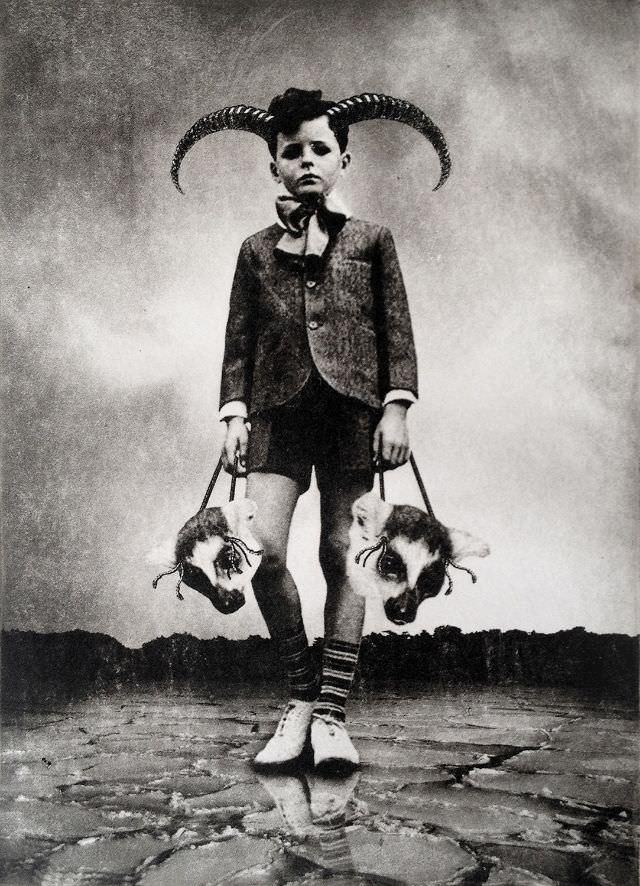
A solitary boy stands center stage against a bare, studio-like backdrop, dressed in a neat jacket, shorts, and a large bow at the neck. Above his brow arcs an unsettling pair of horned shapes, reading like a headdress or costumed appendages rather than a natural feature. The floor beneath him glints with a damp sheen, as if the scene has been set on a thin wash of water to catch reflections and deepen the mood.
In each hand he grips a strap, and at the ends hang two mask-like animal heads with blank, heavy expressions—props that feel part trophy, part theatrical burden. The contrast is striking: the child’s upright posture and formal clothing suggest innocence and ceremony, while the masks introduce folklore, carnival, or ritual, hinting at a world where identity can be worn, carried, or surrendered. Even without a named place or date, the photograph reads as an artwork—carefully staged, symbolic, and designed to linger in the viewer’s imagination.
“The Boy and The Masks” works beautifully as a historical photo for collectors of vintage oddities, surreal portraiture, and early experimental staging. Its stark composition, muted tones, and deliberate props make it a compelling example of how photographers used costume and masquerade to push beyond simple documentation into visual storytelling. For a WordPress post, this image invites readers to interpret the drama for themselves: a child on the threshold between play and myth, holding two faces that are not his own.