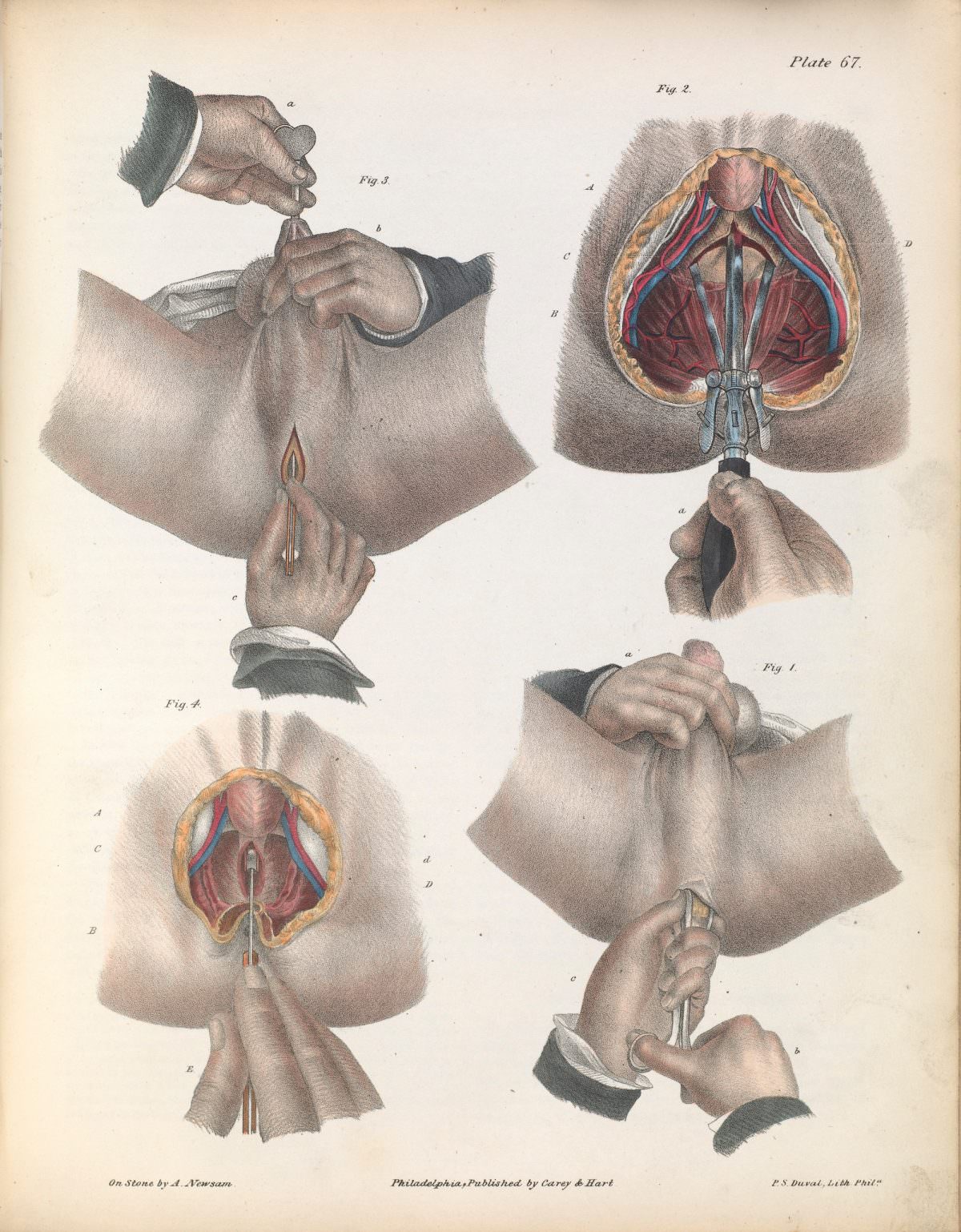
Plate LXVII reads like a lesson frozen on paper, pairing clinical precision with the quiet drama of early surgical practice. The sheet presents multiple figures—hands, instruments, and cross-sectional anatomy—arranged to guide the viewer through lithotomy, the removal of a bladder stone, described here as a bilateral and vesico-rectal operation. Fine lettered labels and figure numbers turn the artwork into a roadmap, inviting close study rather than casual viewing.
Across the panels, the artist emphasizes technique: the grip of the surgeon’s hands, the controlled placement of blades and forceps, and the staged access to the pelvic structures. Vivid color separates vessels, muscle, and tissue planes, making the internal landscape legible to students and practitioners who depended on such prints for training. The juxtaposition of external positioning with internal views underscores the period’s fascination with anatomy as both a science and a craft.
Details along the margins—“Plate 67” and publication credits naming Philadelphia and the firm Carey & Hart—hint at the transatlantic world of medical publishing in which these surgical atlases circulated. For readers interested in the history of medicine, urology, or anatomical illustration, this lithotomy plate offers a stark reminder of the ingenuity required before modern imaging and anesthesia transformed operating rooms. As a historical medical illustration, it stands at the intersection of art, education, and the evolving standards of surgical knowledge.