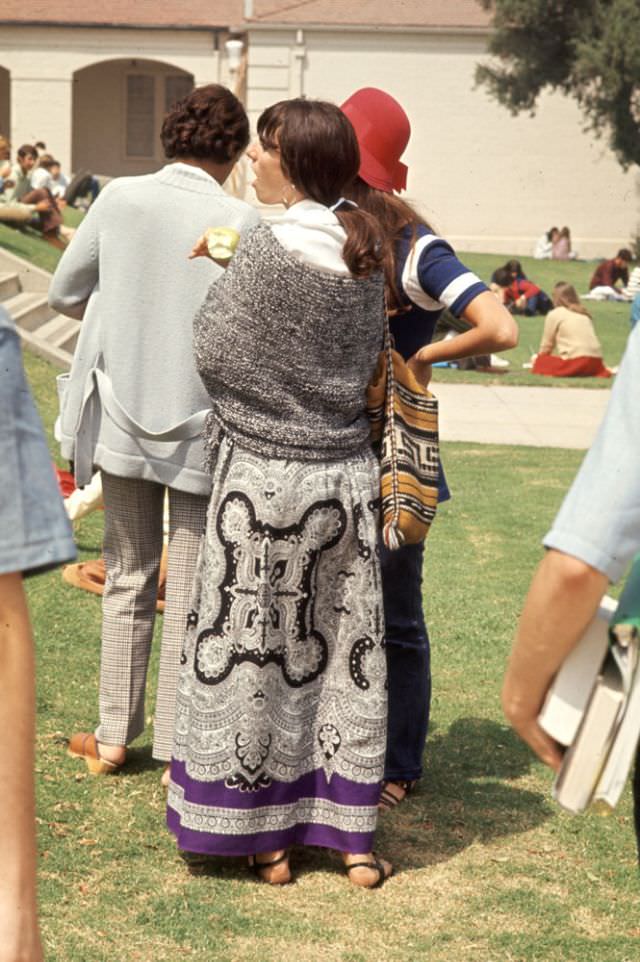
Mid-conversation on a sunny campus lawn, a Southern California high school student stands wrapped in a textured wool shawl over an old-fashioned tapestry skirt, the ornate patterning cascading nearly to the ground. The look feels deliberately antique—romantic, heavy with design—yet worn with the casual ease of a school day, paired with simple shoes and an unstudied posture. Around her, other students drift through the frame, turning the outfit into a vivid focal point against the soft greens of grass and the pale school building in the background.
In 1969, youth style often borrowed freely from the past, and this ensemble speaks to that era’s fascination with folk-inspired and thrifted clothing. The shawl reads as practical warmth but also as statement, while the skirt’s rich motif suggests tapestry or brocade influences reimagined for teenage life. Nearby figures in knitwear, tailored pants, and a bold hat add context: fashion on campus wasn’t uniform so much as a moving collage of personal experiments.
Beyond the clothing, the photograph evokes the social rhythm of a high school courtyard—students clustering, lingering, and watching one another, with attire acting as both self-expression and conversation starter. The scene captures late-1960s American school culture in color: informal gatherings, outdoor spaces, and the quiet confidence of dressing differently. For anyone searching for 1969 fashion, vintage teen style, or Southern California campus life, this image offers a grounded glimpse of how historical trends became everyday wear.