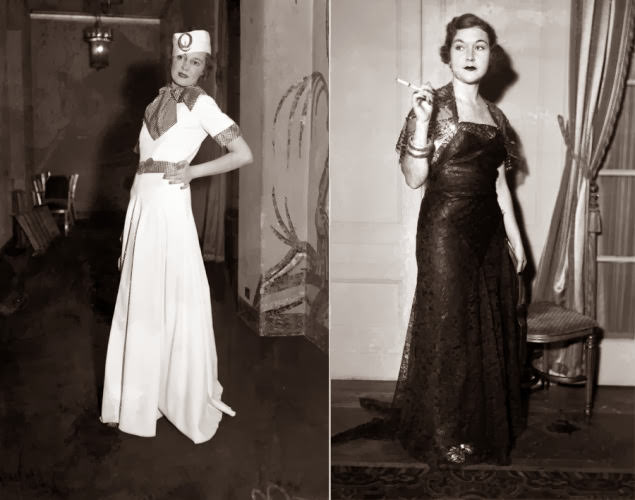
Sailor chic meets showroom elegance in this paired view of early-1930s fashion, where crisp tailoring and theatrical presentation shared the same runway space. On the left, model Diane Beauchamp steps into the spotlight in a white pique dress with nautical detailing, the structured bodice and clean lines emphasizing a polished, daytime smartness that still reads modern. The long skirt falls in an easy sweep, while the cap and contrasting trim lean into the “ahoy” theme without tipping into costume.
Across the split, the mood deepens: the 1933 look favors shadow and shimmer, with a darker gown edged in sequin trim that catches the light along the neckline and hem. A confident pose, evening gloves, and a cigarette held like an accessory underline the era’s cultivated glamour, when attitude could be as important as fabric. Together, these two models highlight how 1930s style moved between crisp, sporty inspirations and after-dark sophistication.
Fashion historians often point to the decade’s love of fluid silhouettes and figure-skimming cuts, and both ensembles echo that pursuit of length, drape, and controlled drama. The contrast between textured white pique and glinting embellishment also tells a broader story about materials, lighting, and how designers used detail to photograph well for newspapers and publicity stills. For readers exploring 1930s women’s fashion, runway culture, and vintage modeling, this image offers a vivid snapshot of style’s shifting moods during the period.