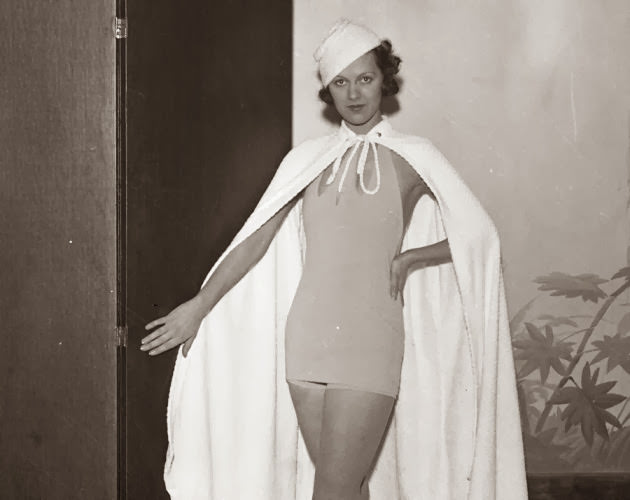
A confident model steps forward with the easy poise of a stage performer, her hand set at the hip as a sweeping cape-like skirt frames the sleek lines beneath. The ensemble—described as a Nantucket one-piece with a detachable skirt—leans into the playful “Superwoman” vibe promised by the title, pairing practicality with theatrical flair. Even in a simple indoor setting, the silhouette reads as pure 1930s modernity: streamlined, athletic, and made to be seen.
Fashion in 1933 was negotiating new ideas about movement, leisure, and the changing image of the female body, and swimwear became one of the most visible arenas for that shift. The one-piece suit suggests a more body-conscious cut than earlier decades, while the removable overskirt offers a nod to modesty and versatility, turning a bathing suit show into a lesson in styling. Details like the small cap and the crisp drape of the fabric emphasize how these runway presentations sold not just garments, but a whole attitude of streamlined elegance.
Ruth Dodd’s look captures why vintage swimwear photography remains so searchable and shareable today: it sits at the crossroads of fashion history, women’s culture, and early modeling as spectacle. For readers interested in 1930s style—bias-cut influence, evolving hemlines, and the rise of confident, camera-ready models—this image offers a vivid snapshot without needing a seaside backdrop. It’s a reminder that even beachwear was crafted to tell a story, balancing glamour with the promise of freedom and motion.