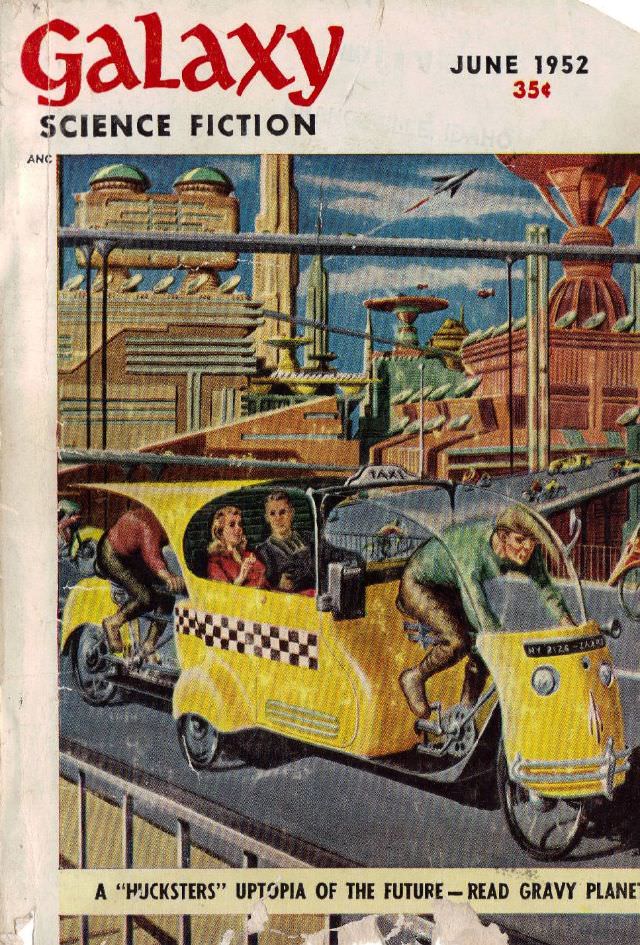
Bright, oversized lettering announces *Galaxy Science Fiction* at the top, with “June 1952” and the 35¢ price tucked into the corner—an immediate reminder of the era when glossy pulp magazines were a cheap ticket to tomorrow. The cover art leans into mid-century optimism, framing the future as something you could buy at a newsstand and carry home under your arm. Even the worn edges and faint smudges feel like part of the story, evidence of a magazine that was handled, read, and passed along.
Across the scene, a bustling, elevated roadway cuts through a layered city of towers, domes, and sweeping bridges, all rendered in warm, painterly color. Small craft dart through the air while streamlined vehicles glide along the lanes, blending familiar traffic rhythms with bold speculative architecture. The composition is busy but legible, guiding the eye from the foreground action into a deep, imaginative skyline that promises speed, progress, and a crowded urban future.
In the foreground, a taxi-like vehicle with a checker stripe becomes the stage for a sly bit of satire: apes appear to be the chauffeurs, ferrying human passengers through this supposed utopia. That playful reversal captures what made classic science fiction magazine covers so enduring—spectacle on the surface, provocation underneath. For collectors of vintage sci-fi art and readers interested in 1950s futurism, this *Galaxy* cover is a vivid snapshot of how the atomic-age imagination pictured everyday life in the years ahead.