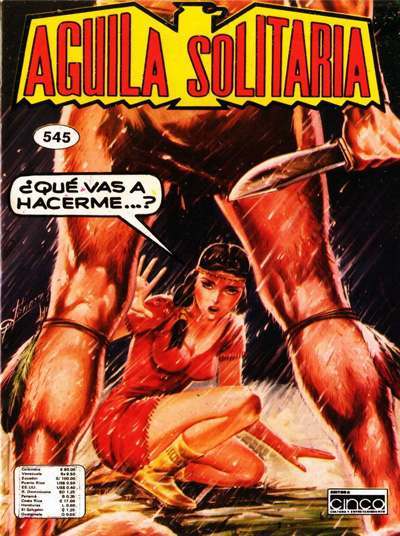
Bold Spanish lettering shouting “AGUILA SOLITARIA” crowns this pulp-style cover art, setting a dramatic tone before your eye drops to the cramped space below. A woman in a vivid red dress crouches low at the center, her arms braced wide as if forming an urgent, improvised frame against the danger closing in. Rain slants across the scene, and the composition funnels attention through the tension between her compact pose and the towering legs that hem her in, a classic illustration of how geometry can amplify narrative.
The A-frame silhouette here isn’t just a body position; it’s a visual device that directs perspective, scale, and power. By planting the figure close to the ground with limbs angled outward, the artist creates a triangular structure that reads instantly—even at a distance on a newsstand or in a thumbnail today. That immediate legibility is exactly why the A-frame continues to thrive in fashion photography, editorial illustration, and modern movie posters: it builds a spotlight out of anatomy, turning posture into a stage.
In the details, the cover’s speech bubble (“¿QUÉ VAS A HACERME…?”) and the surrounding typography work like design cues that still influence contemporary poster layout, where text must coexist with high-contrast drama. The saturated reds and yellows, the exaggerated anatomy, and the stormy motion lines all echo an era of sensational print culture while offering a blueprint for modern visual storytelling. For readers tracing the A-frame’s influence across fashion, art, and poster design, this piece is a striking reminder that one iconic pose can carry suspense, allure, and impact across generations.