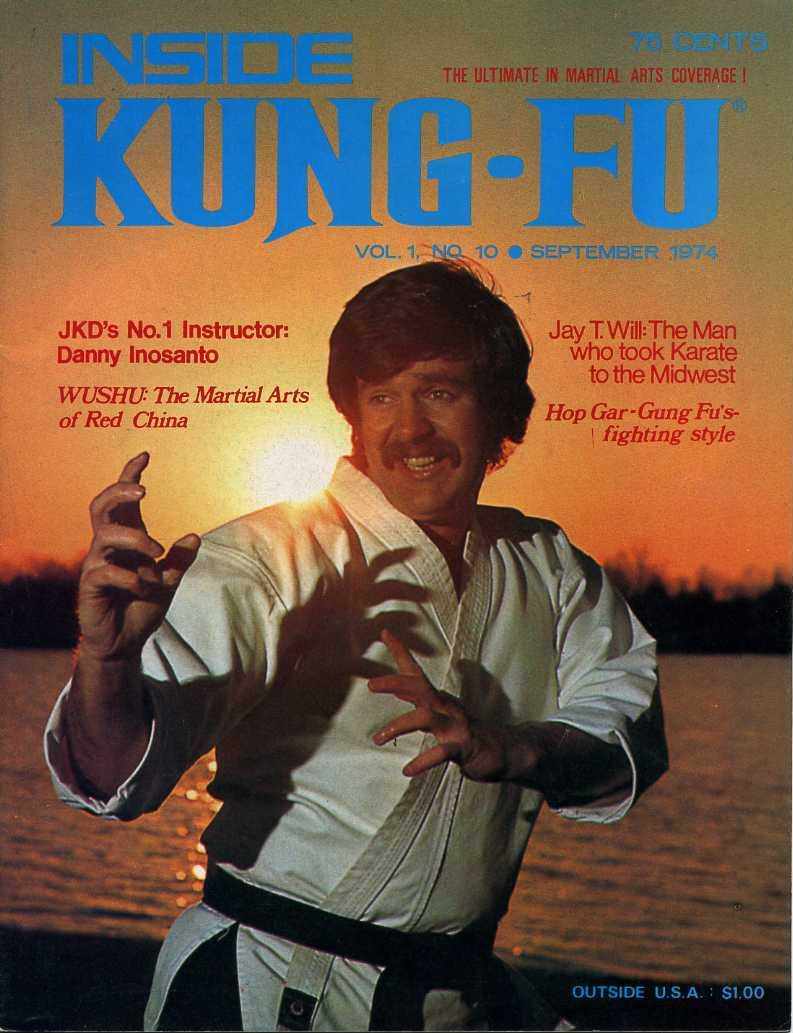
Bold block lettering shouts “INSIDE KUNG-FU” across a warm, sunset-toned cover, priced at 79 cents and tagged as “The ultimate in martial arts coverage!” A moustached martial artist in a white gi and dark belt holds a poised fighting stance, hands raised and fingers set as if mid-demonstration, his figure silhouetted against shimmering water. The issue line reads “Vol. 1 No. 10 • September 1974,” placing it in the early surge of American martial arts magazine culture that would only grow louder through the 1970s and into the 1980s.
Cover lines hint at what readers were hungry for in that era: star instructors, regional pioneers, and a widening world of styles and traditions. Names and topics are splashed in red type—“JKD’s No.1 Instructor: Danny Inosanto,” “WUSHU: The Martial Arts of Red China,” “Jay T. Will: The Man who took Karate to the Midwest,” and “Hop Gar—Gung Fu’s fighting style”—selling expertise, mystique, and practical knowledge in the same breath. It’s the classic formula of the martial arts mags’ heyday: promise the inside story, then invite you to collect the whole world one issue at a time.
For anyone exploring “Everybody Was Kung Fu Fighting” and the boom years of martial arts magazines, this cover art is a vivid snapshot of the scene’s design language and aspirations—confident typography, dramatic color, and an instantly readable action pose. The layout balances celebrity appeal with technique-forward credibility, aiming at readers who trained, dreamed of training, or simply wanted to feel close to the action. As a piece of pop-culture ephemera, it also works as a miniature time capsule of how martial arts were packaged, popularized, and passionately consumed in print.