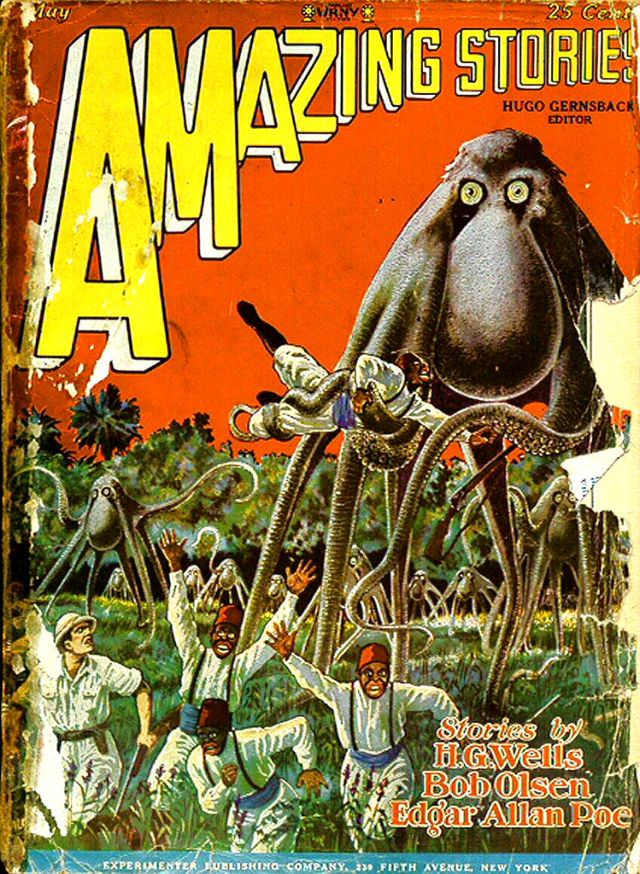
May 1928 arrives in a blaze of orange and oversized lettering, with “AMAZING STORIES” shouting across the top like a marquee for the future. The worn edges and scuffed surface only add to the charm, reminding us this was once a disposable newsstand object meant to be handled, folded, and read. Even the small details—price in the corner, the editor credit to Hugo Gernsback—anchor the cover in the lively pulp magazine marketplace of the late 1920s.
Dominating the scene, towering cephalopod-like creatures loom above a dense, tropical-looking landscape while human figures below fling up their arms in panic and motion. The illustrator leans into scale and spectacle: long tentacles arc through the air, a central monster’s staring eyes fix the viewer, and the foreground is crowded with frantic bodies that make the threat feel immediate. It’s classic pulp composition—high contrast, bold color, and a single dramatic moment designed to stop a passerby in their tracks.
Amazing Stories covers like this helped define early science fiction as a visual experience as much as a literary one, packaging wonder, peril, and “what if?” into a single, unforgettable image. The bottom text teases famous names—H. G. Wells and Edgar Allan Poe among them—using literary pedigree to sell sensational adventure. For collectors and genre historians, this May 1928 cover art stands as a vivid snapshot of how the magazine invited readers to imagine strange worlds long before science fiction became mainstream.