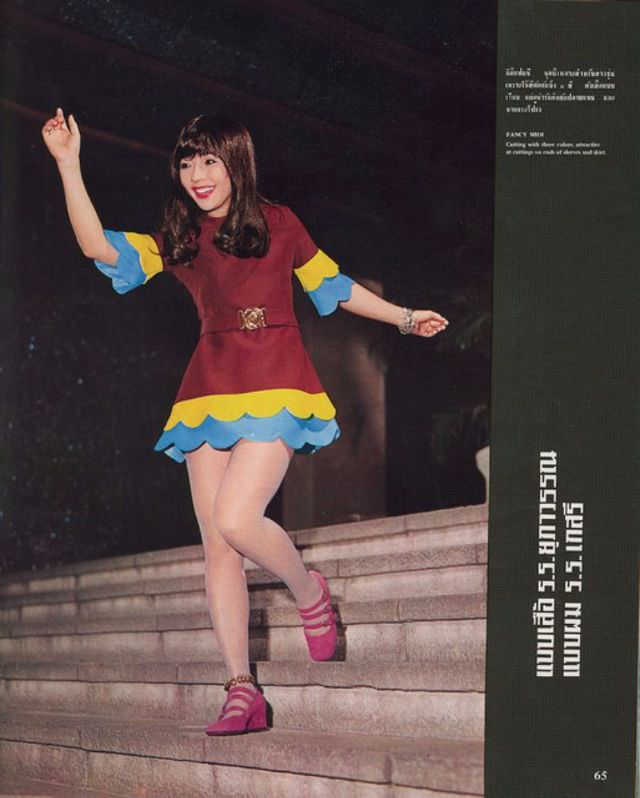
A burst of color steps straight off the magazine page: a young model in a short, swingy dress with scalloped bands of blue and yellow, cinched at the waist with a statement buckle. Her glossy, shoulder-length hair and wide smile match the upbeat mood, while bright shoes and coordinating accessories underscore the playful confidence that defined late‑1960s youth style. Set against a dark backdrop and photographed mid‑movement on a flight of stairs, the scene feels more like a pop performance than a posed fashion plate.
Along the margin, Thai text and a small English caption reading “FANCY MINI” hint at how international trends were being translated for local readers—mini skirts, bold color-blocking, and youthful silhouettes packaged as modern and aspirational. The design of the layout, with its vertical typography and clean negative space, reinforces the era’s graphic sensibility and the magazine’s role as both style guide and cultural tastemaker. Even without a named location, the editorial staging suggests urban nightlife and the promise of new social freedoms.
Viewed today, these 1968 Thai fashion magazine pages offer more than nostalgia; they’re a vivid record of how global “flower power” energy intersected with regional tastes and everyday glamour. The outfit’s cheerful palette, theatrical hemline, and carefree pose speak to a moment when fashion embraced fun, movement, and visibility. For readers interested in vintage Thai fashion, 1960s culture, and the history of mini skirts in Asia, this image is an inviting doorway into a changing world of style.