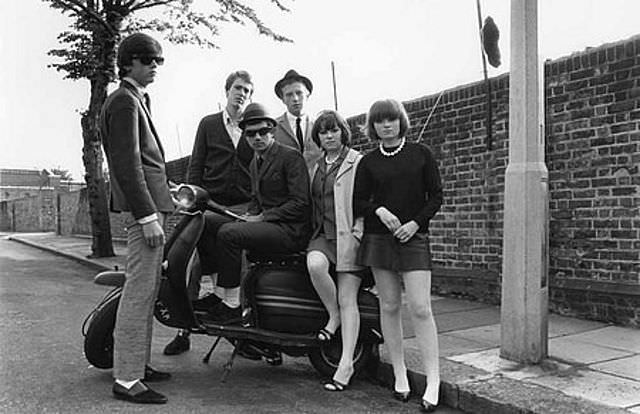
Sharp tailoring and street-level swagger collide as a group of young people gather around a scooter on a quiet pavement, their poses as deliberate as their outfits. Slim-cut jackets, narrow trousers, neat shoes, and carefully styled hair point straight to the Mod aesthetic, where modernity meant looking clean, controlled, and effortlessly cool. Even the scooter becomes part of the wardrobe—practical transport turned into a rolling statement about taste, speed, and urban identity.
Behind the fashion sits a wider 1960s tension between subcultures competing to define what youth should look like and how it should move. Mods prized sleek European style and a polished silhouette, while their Rocker counterparts were known for heavier leathers, motorbikes, and a more rugged, rebellious edge. Photos like this help explain why the “Mods vs Rockers” story endures: the conflict wasn’t only about music or attitude, but about visibility—who owned the street, the night, and the right to be seen.
Every detail here works like a clue for historians of fashion and culture, from the crisp lines of clothing to the self-assured stances aimed at the camera. The brick wall and open roadway frame an everyday setting transformed into a stage, where youth style reads as both personal expression and group belonging. For anyone searching the history of 1960s fashion, Mod culture, scooter style, or British youth movements, this scene distills the era’s style wars into a single, unforgettable moment.