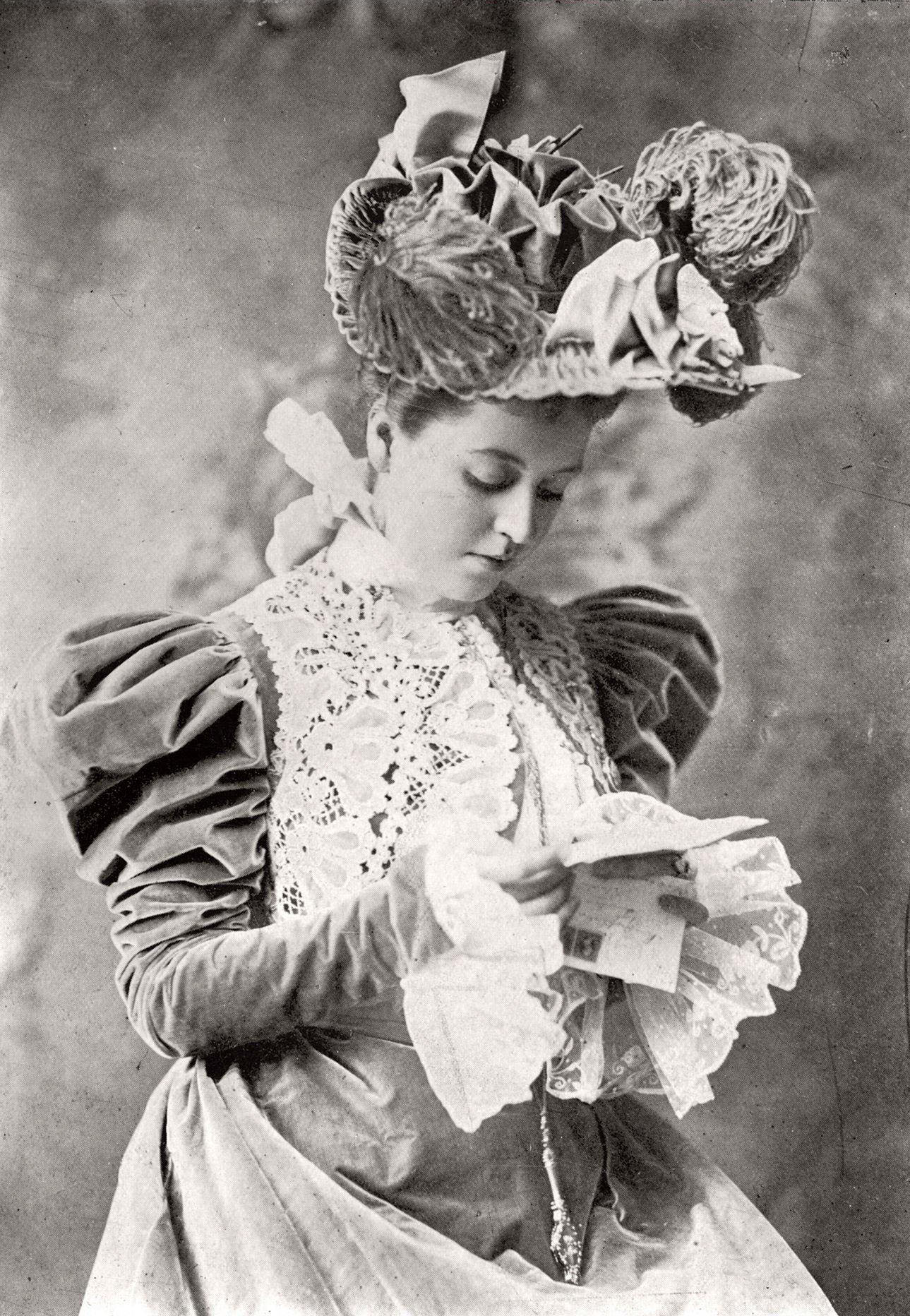
Soft studio light falls across a young woman as she lowers her gaze to a letter held delicately in both hands, a private moment staged with remarkable tenderness in the portrait titled “Love Letter” (1901). Her expression—calm, absorbed, almost wistful—draws the viewer toward the quiet drama of reading, while the blurred backdrop keeps attention on face, posture, and the paper’s crisp edges. The composition feels intentionally intimate, turning everyday correspondence into a small narrative of anticipation and sentiment.
Dominating the silhouette is an extravagant Edwardian hat, piled high with sweeping fabric and abundant floral trim that signals the era’s love of height, spectacle, and decorative excess. The dress reinforces that fashion language: pronounced puffed sleeves, a fitted bodice, and a cascade of lace at the front and cuffs, creating a contrast between structured tailoring and delicate handiwork. Even in monochrome, the textures—satiny sheen, netted lace, and soft feathers or blossoms—read clearly, making this a rich reference for Edwardian women’s fashion and the social importance of millinery.
Beneath the style lies a cultural snapshot of how romance and respectability were performed at the turn of the twentieth century, when letters carried emotional weight and etiquette shaped how feelings could be shown. The sitter’s downturned eyes and restrained pose suggest modesty as much as longing, reflecting an idealized femininity often celebrated in portraiture of the period. For collectors and researchers, “Love Letter” offers both a compelling story and an SEO-friendly window into 1901 portrait photography, Edwardian hats, and the fashion-and-culture world that framed them.