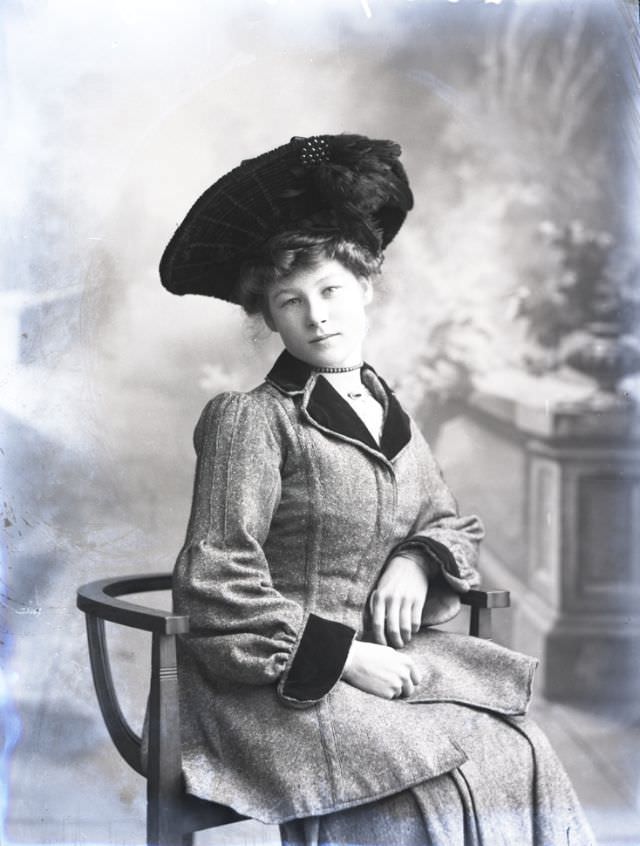
Miss Pronger meets the camera with a composed, almost questioning gaze, seated sideways in a studio chair as if caught between conversation and stillness. Her large Edwardian hat dominates the upper frame, its broad brim and dark trimming creating a dramatic silhouette that draws the eye back to her face. Soft studio lighting smooths the scene, while the painted backdrop and faint furnishings hint at the carefully staged environment of early-20th-century portrait photography.
The clothing speaks clearly of Fashion & Culture in 1906: a structured coat or tailored dress with full sleeves, contrasting cuffs, and a high collar that frames the neck and jawline. Details like the narrow choker and the crisp lines of the bodice suggest the era’s preference for polish and restraint, even in personal portraits. Her relaxed hand placement and slight lean against the chair’s arm lend warmth to an otherwise formal presentation, balancing elegance with individuality.
Dated November 19, 1906, this portrait preserves more than a likeness—it preserves the Edwardian language of style, where hats “defined an era” through scale, texture, and social signaling. The interplay of dark hat and lighter garment creates a refined tonal contrast typical of studio images from the period, designed to photograph well and flatter the sitter. For anyone researching women’s fashion history, Edwardian portraits, or the cultural meanings of millinery, Miss Pronger’s pose offers a quietly vivid window into how identity was worn as much as it was photographed.