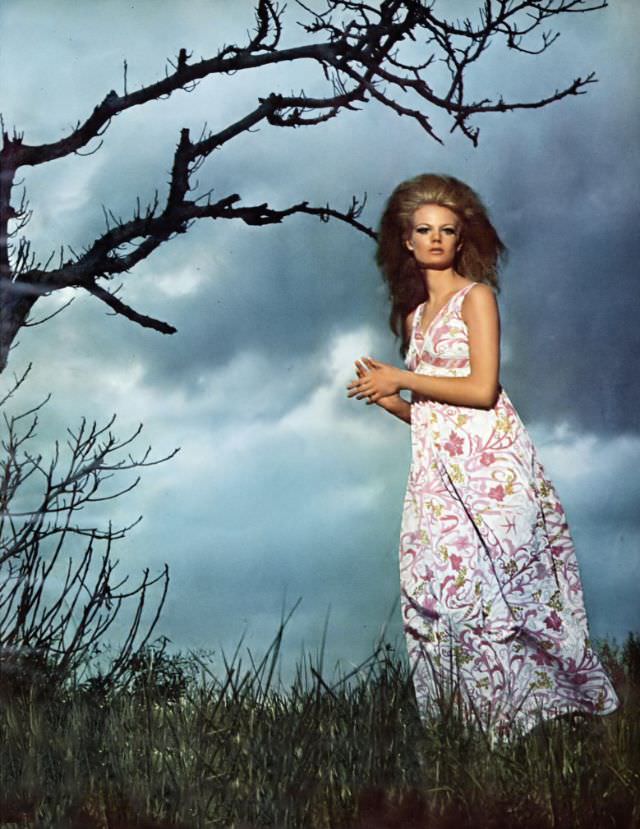
Against a bruised, storm-laden sky, a model stands in tall grass beneath the stark silhouette of leafless branches, her pose poised yet watchful. The setting feels deliberately untamed—part moor, part windswept field—so that nature’s rough textures heighten the image’s fashion drama. Heavy, sculpted hair and a steady gaze give the scene a cinematic tension, as if the weather might turn at any moment.
Worn here as an Empire nightdress by Emilio Pucci, the garment brings softness to the landscape with its pale ground and swirling, floral-like print. The high waist and long, flowing line read as both intimate and modern, a lingerie-adjacent look pushed confidently into the open air. Even from a distance, the fabric’s patterning carries Pucci’s signature sense of movement, turning the dress into a kind of portable color field against the charcoal clouds.
Dated April 1967, the photograph speaks to a mid-1960s fashion culture that loved contrasts: elegance staged in raw environments, sensuality framed with a cool, editorial restraint. The low vantage point and expansive sky emphasize the model’s silhouette while letting the dress billow like a quiet statement rather than a costume. As a piece of 1960s fashion photography, it captures how designers and image-makers used mood, landscape, and daring nightwear styling to redefine glamour for a new era.