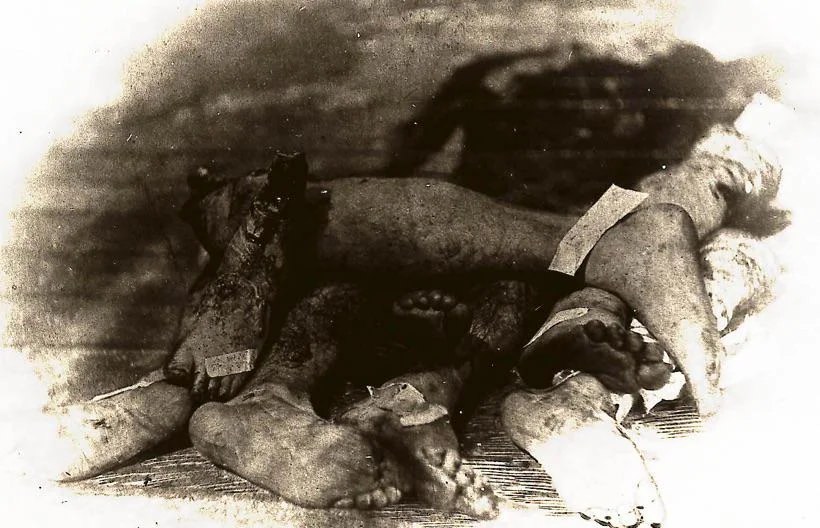
Stark and unguarded, the photograph confronts viewers with the aftermath of Civil War combat as injured legs lie intertwined on a bed or pallet, bandages and crude wrappings hinting at hurried medical care. The frame is tight, intimate, and unsettling, refusing any heroic distance; it keeps attention on flesh, swelling, and the brutal reality that limb loss was often the price of survival. For readers searching Civil War amputee veterans history, this kind of image offers an immediate entry into what wartime wounds looked like before recovery narratives began.
Battlefield surgery and overcrowded wards forced fast decisions, and amputations became one of the era’s most common life-saving procedures. What remains visible here—dressings, contorted positioning, the sense of bodies at rest but not at ease—speaks to pain management, infection risk, and the long days between injury and any hope of stability. Rather than focusing on a single identity, the photo stands in for thousands of soldiers whose stories were shaped by trauma, medical improvisation, and the uneven resources of Civil War medicine.
After the guns fell silent, amputee veterans faced a second campaign: learning to work, travel, and support families with altered bodies, often relying on rudimentary prosthetics, pensions, and community aid. The post “Surviving Limb Loss: The Stories of Civil War Amputee Veterans” explores that difficult transition, pairing the visceral evidence of wartime wounds with the quieter struggles of rehabilitation and endurance. In preserving and revisiting such images, we’re reminded that the Civil Wars were fought not only on battlefields, but in hospitals, homes, and the long years of recovery that followed.