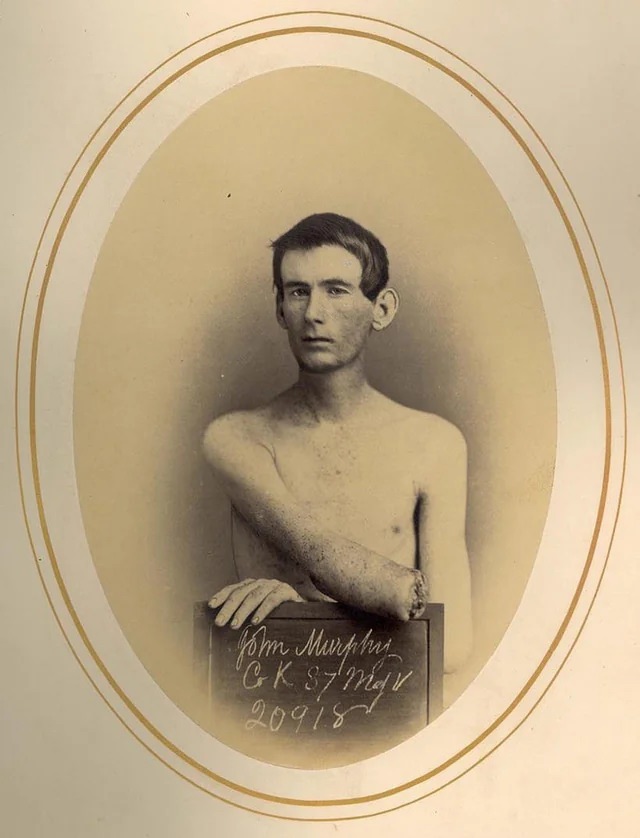
A young soldier sits bare-chested against a plain studio backdrop, his posture steady, his expression unreadable. One arm ends in a healed amputation below the elbow, the limb angled across his torso as if to make the fact impossible to ignore. At the bottom of the frame, a small board bears handwritten identification, the kind of marker used in military hospitals and medical documentation to keep a wounded man from becoming anonymous.
Civil War amputee veterans appear in the historical record through portraits like this—intimate, clinical, and deeply human all at once. The oval framing and careful lighting pull the viewer toward scars and skin texture, hinting at surgery, infection risk, and the long rehabilitation that followed battlefield trauma. Photographs such as these were often made for surgeons, government files, or pension claims, turning personal injury into evidence while also preserving a stark visual testimony of survival.
Surviving limb loss meant more than living through the operation; it meant navigating a changed body in a nation struggling to care for its wounded. Many veterans faced years of pain, improvised tools, early prosthetics, and the slow work of learning new ways to labor, write, eat, and earn a living. This post explores the stories behind Civil War amputation images—how disability, medicine, and memory intersected for the men who carried the war home on their bodies.