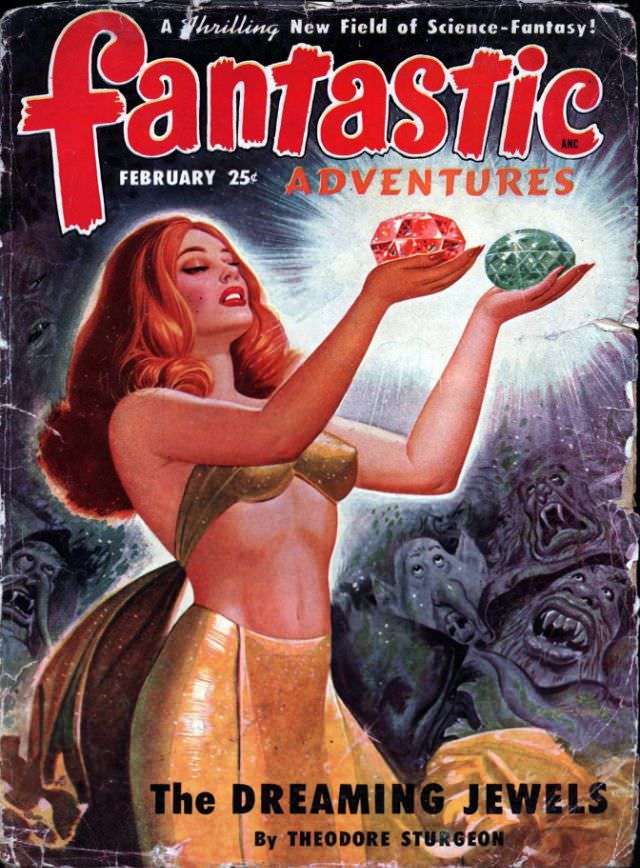
Bold, oversized lettering shouts “Fantastic” across the top, selling “a thrilling new field of science-fantasy” with the confidence of mid-century pulp publishing. The February 1950 issue is priced at 25¢, and the worn edges and softened colors hint at the magazine’s long journey through hands, racks, and boxes. Even before you read a word, the cover design does its job: promise spectacle, danger, and wonder in equal measure.
At the center, a red-haired heroine in gleaming, futuristic attire lifts two radiant gemstones—one red, one green—held like offerings in a spotlight of starburst light. Their glow seems to push back the surrounding gloom, where shadowy, grotesque faces and reaching forms crowd the background, watching with hunger and awe. That contrast between luminous “jewels” and looming menace captures the era’s favorite tension: science-fiction glamour set against unknown worlds and barely contained horrors.
Anchoring the scene is the story line “The Dreaming Jewels” by Theodore Sturgeon, a title that turns the gems into more than simple treasure and invites speculation about strange powers, altered realities, or alien biology. As a piece of vintage science fiction cover art, this issue is also a window into 1950s visual storytelling—how publishers blended allure, peril, and bright color to stop browsers in their tracks. For collectors and readers alike, it remains a striking example of pulp magazine history and the marketing of imagination on the newsstand.