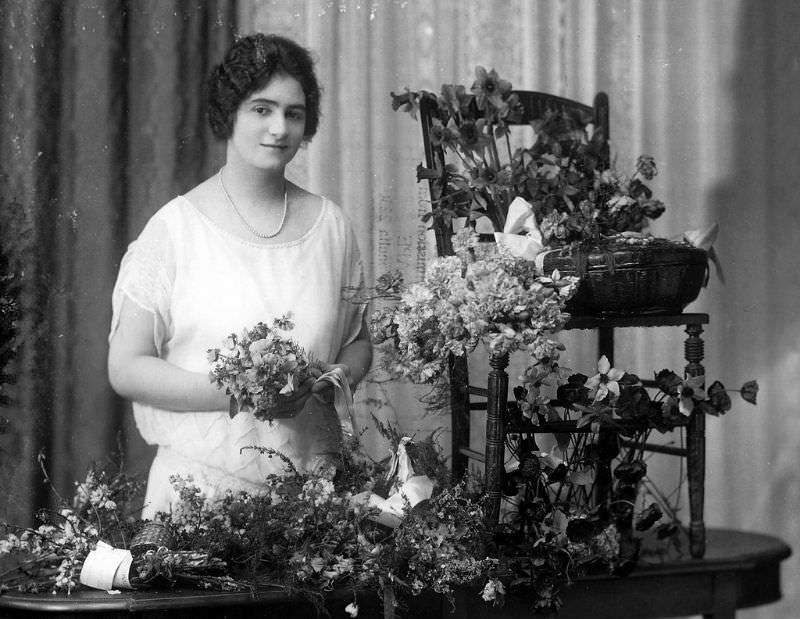
Soft studio light falls across a young Melbourne woman posed among abundant flowers, her calm gaze meeting the camera with the self-assurance often associated with the flapper era. The portrait balances simplicity and glamour: a loose, light-toned dress with short sleeves, a delicate necklace at the neckline, and a neatly styled bob that frames her face. Behind her, draped curtains create a theatrical backdrop, giving the scene the polished feel of 1920s portrait photography.
Florals dominate the composition, spilling over a table and rising in a basket set on a small wooden stand, as if the sitter has stepped briefly from arranging bouquets to be photographed. The careful staging hints at popular studio aesthetics of the time—romantic props, textured layers, and a sense of cultivated modern femininity. Even without a named location in the frame, the title’s link to Melbourne grounds the image in the city’s lively interwar fashion and cultural moment.
Fashionable flappers were never just about hemlines and haircuts; they signaled changing attitudes toward leisure, independence, and public identity, especially in urban Australia. This glamorous portrait speaks to that shift through quiet details—relaxed clothing, direct posture, and an intimate domestic motif presented with professional elegance. For anyone searching 1920s Melbourne women, flapper style, or Australian fashion history, the photograph offers a vivid, human glimpse of modernity taking root in everyday life.