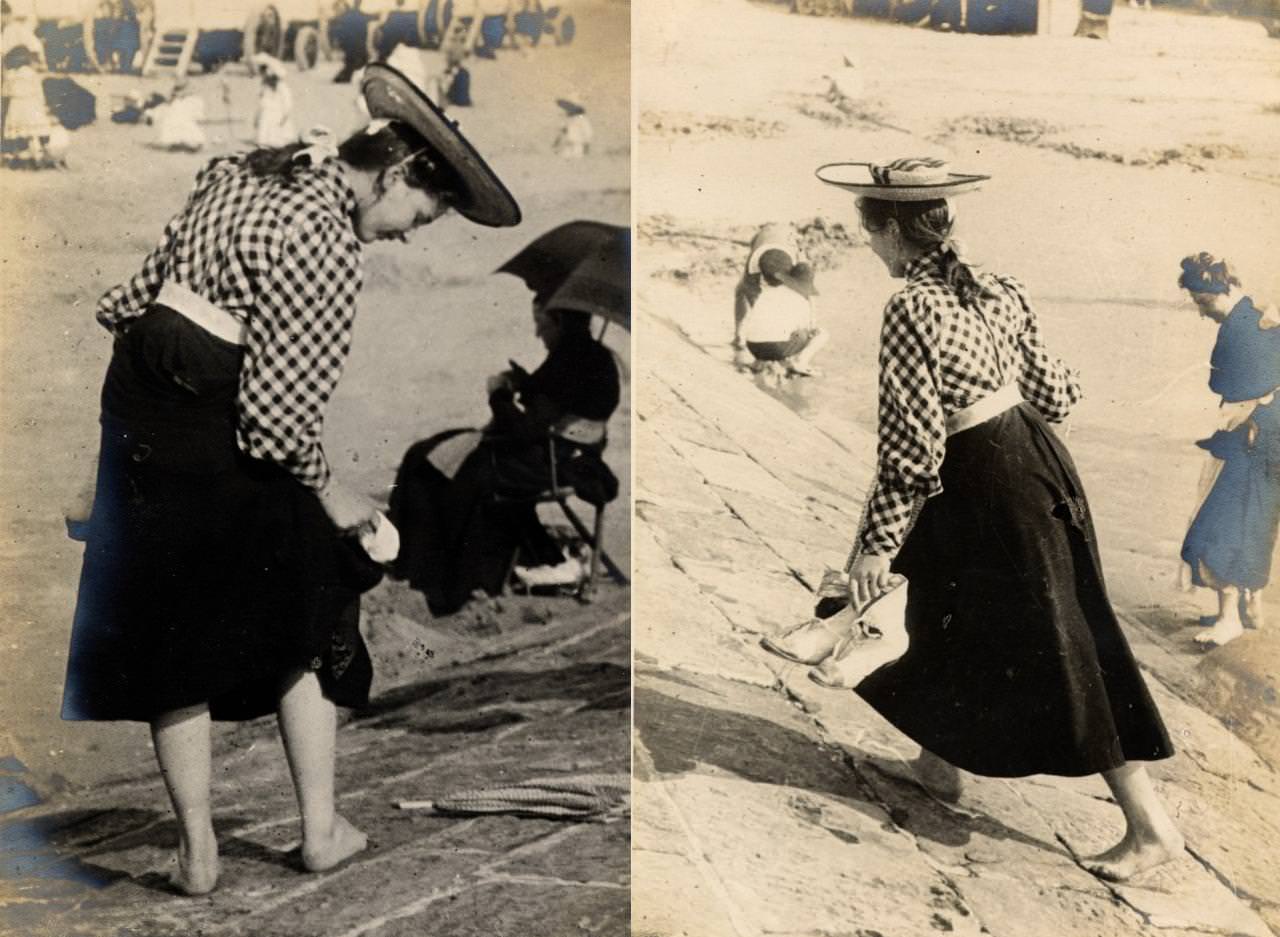
Bare feet meet the cool surface of a paved slope as a young woman leaves the sand behind, shoes dangling from her hand to make the climb easier. Her wide-brimmed hat and checkered blouse keep their crisp, seaside-smart look, while her long dark skirt sways with each careful step. In this small, candid moment, beachgoing feels less like a posed outing and more like lived experience—practical, windy, and slightly awkward in the best way.
Behind her, the shore is busy with other holidaymakers, including figures shaded by umbrellas and a child near the waterline, turning the background into a soft blur of leisure. The slanted promenade or ramp hints at the built environment of popular coastal resorts, where engineered walkways met the shifting edge of the sea. That contrast—structured stone underfoot, loose sand and surf nearby—adds texture to the scene and anchors it firmly in the rhythms of a day at the beach.
Clothing tells its own story here, revealing how early 20th-century beach fashion balanced modesty with mobility: fitted sleeves, a cinched waist, and a skirt designed for public respectability, even at the seaside. Going barefoot reads not as rebellion but as common sense, a brief suspension of formality to navigate slippery or sandy ground without ruining shoes. For anyone searching Edwardian beach culture, seaside fashion history, or the everyday rituals of resort life, this image offers an intimate glimpse of how people actually moved through these coastal spaces.