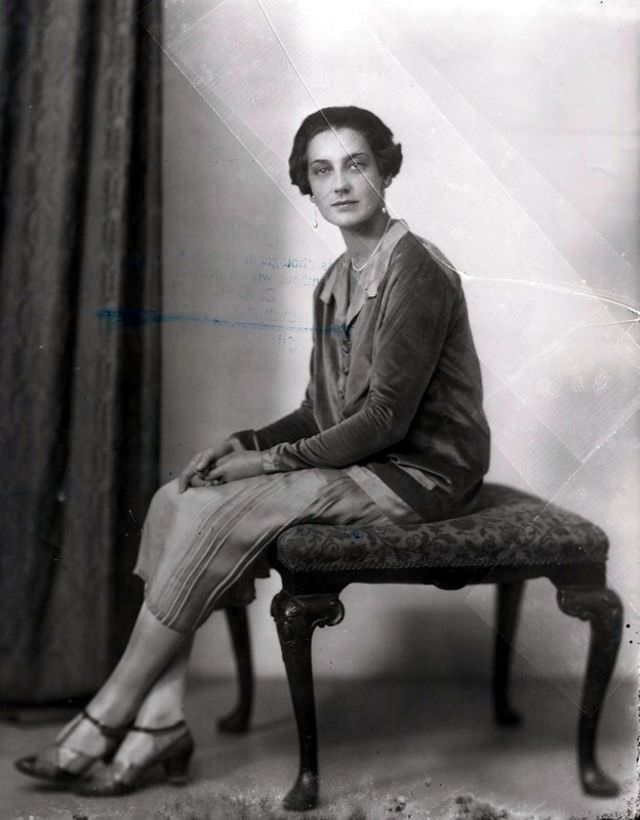
Poised on an upholstered bench in a simple studio setting, a stylish young woman meets the camera with the composed confidence so often associated with the flapper era. Her neat, short bob frames the face in a distinctly 1920s silhouette, while the clean backdrop and heavy side curtain keep attention on her expression, posture, and clothing. The soft lighting and faint wear on the print—visible creases and scratches—add to the sense of a well-handled keepsake from Melbourne’s interwar years.
Fashion details anchor the portrait in the decade’s modern taste: a streamlined blouse with a modest collar, a long skirt with crisp vertical striping, and practical yet fashionable strap-heeled shoes. A delicate necklace and drop earrings provide restrained glamour, suggesting an everyday elegance rather than theatrical costuming. Even seated, her slightly angled pose and relaxed hands read like a practiced social photograph, hinting at the growing influence of cinema, magazines, and department-store style on women’s fashion and culture.
Melbourne in the 1920s was a city where new freedoms were negotiated in public and in private, and portraits like this help trace that shift through fabric, haircut, and attitude. The image balances modernity with propriety—less about the wild dance floor stereotype and more about self-presentation, independence, and quiet sophistication. For historians of Australian fashion, women’s history, and 1920s culture, it offers an intimate glimpse of how glamour was worn and photographed in the everyday life of the period.