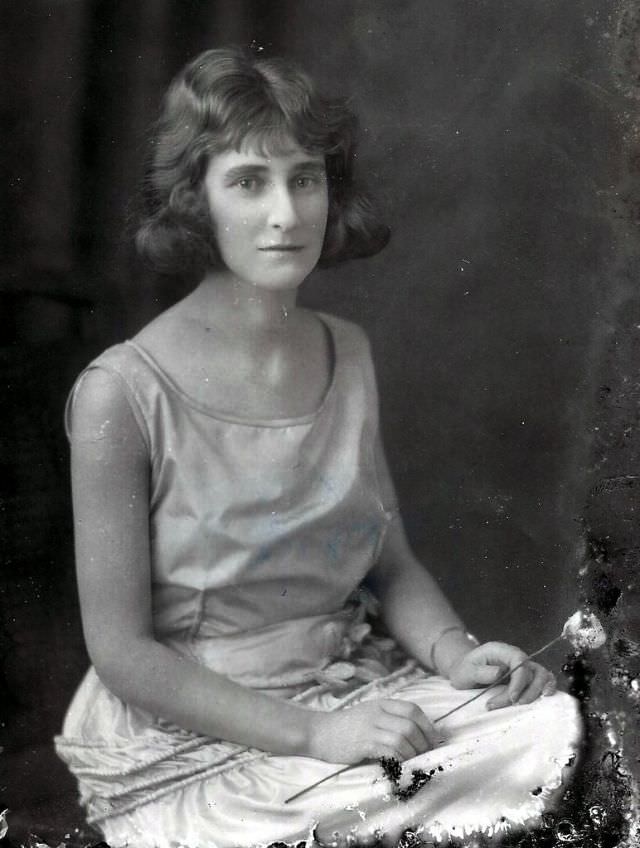
Soft studio light falls across a young woman’s face as she sits angled toward the camera, her gaze calm and self-possessed. A short, waved bob frames her features in the unmistakable flapper style, while the simple sleeveless dress—with a low, rounded neckline and a relaxed, straight silhouette—signals the modern, freer fashion that defined the 1920s. Even in a formal portrait setting, the mood feels intimate, as if the sitter has stepped briefly out of Melbourne’s bustling decade to be recorded at leisure.
Details in the clothing and pose speak to changing ideals in women’s fashion and culture: bare arms, unfussy lines, and an ease of posture that contrasts with earlier, more rigid Edwardian conventions. The fabric catches light with a soft sheen, suggesting a garment chosen to flatter in a photographer’s studio, and the subtle drape across the lap emphasizes comfort as much as elegance. Light wear, specks, and blemishes on the print add to the sense of age, reminding viewers that this is a surviving artifact from a world of dance halls, cinema, and new social freedoms.
Melbourne in the Roaring Twenties was a city where modernity could be worn as readily as it was lived, and portraits like this helped shape what “fashionable” looked like beyond magazines and shop windows. The image serves as a gentle record of everyday glamour—less about spectacle than about confidence, youth, and a carefully chosen look. For anyone exploring 1920s Melbourne women, flapper fashion, and Australian cultural history, this portrait offers a clear window into the era’s style and spirit.