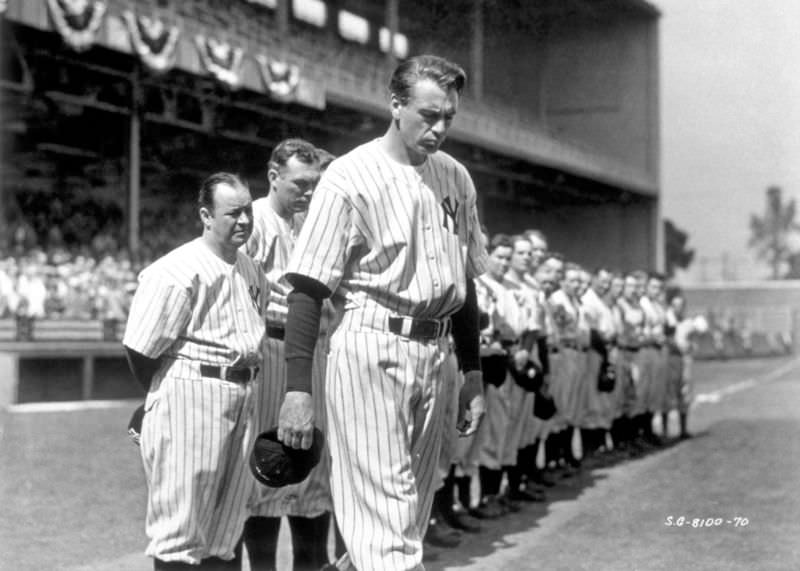
A line of pinstriped ballplayers stands at attention along the foul line, the stadium bunting hanging overhead like a quiet promise of ceremony. In the foreground, one figure walks with head slightly bowed, cap in hand, while teammates trail behind and the crowd blurs into a textured backdrop of faces and seats. The composition feels staged yet intimate, the kind of moment Hollywood used to turn baseball into national myth.
Tied to the post’s title, the scene evokes the world of *The Pride of the Yankees* (1942), where Gary Cooper helped translate Lou Gehrig’s public dignity into a screen language audiences could feel. Uniform details, the orderly lineup, and the formal posture suggest a tribute or pregame acknowledgment rather than action at the plate, emphasizing character over competition. It’s an image that speaks to how Movies & TV of the era framed sports heroes: not only as athletes, but as symbols of endurance and grace.
For collectors and classic film fans, this historical photo sits at the crossroads of baseball history and Golden Age cinema, echoing the movie’s blend of realism and reverence. The stadium setting, the old-style flannels, and the solemn pacing invite readers to imagine the sounds just out of frame—announcers, applause, and the hush that precedes a speech or farewell. Whether you arrive here searching Lou Gehrig, Gary Cooper, or *The Pride of the Yankees* 1942, the image offers a powerful reminder of how legends are preserved—on the field, and on film.