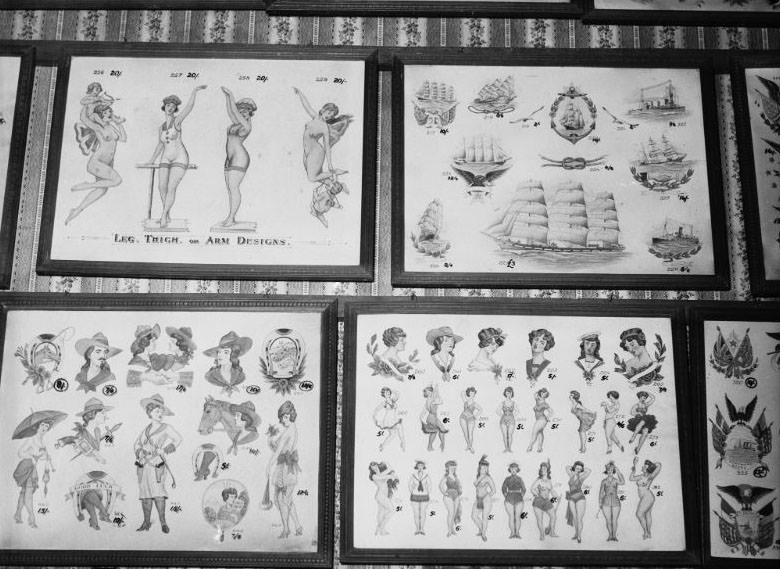
Inside Fred Harris Tattoo Studio in Sydney, the walls were a catalogue of possibilities, and this 17 December 1937 view lets you browse them as a client once did. Framed flash sheets fill the frame in neat rows, each design carefully inked and numbered, suggesting a well-organised business where choice mattered as much as technique. The patterned wallpaper behind the frames adds a domestic, almost parlour-like feel, contrasting with the bold subject matter on display.
Sailor lore and popular romance sit side by side in the artwork: tall ships under full sail, nautical emblems, and decorative motifs share space with pin-up style female figures posed for “leg, thigh and arm designs.” The numbering beside each figure hints at a price list or ordering system, a practical shorthand that turned drawings into services. Together, these tattoo designs reflect a 1930s visual language shaped by travel, military and maritime culture, and the era’s commercial illustration.
For anyone researching Australian tattoo history, vintage tattoo flash, or Sydney’s studio culture, this photograph offers a rare look at how tattooing was marketed and presented between the wars. It also preserves the quieter details of the trade—frames, layout, repetition, and the promise of selection—showing tattoo art not only as personal expression but as storefront display. Seen today, the sheets read like a time capsule of styles that would influence tattoo iconography for decades.