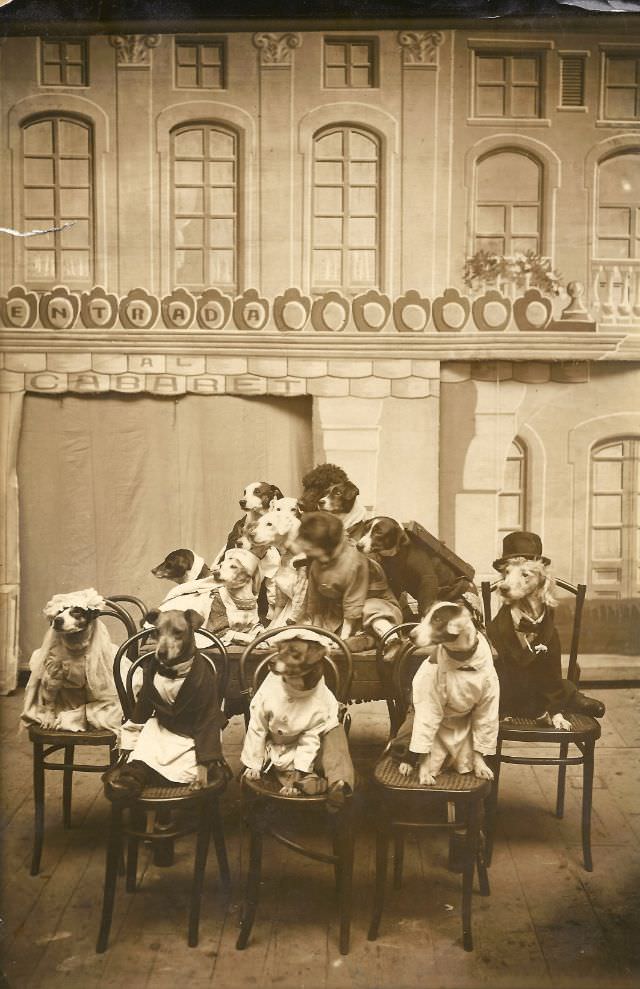
On a tiny stage set like a proper theatre façade, a row of dogs has been arranged into a full mock wedding party, complete with chairs, costumes, and the solemnity of a formal portrait. Little jackets, dresses, and even a jaunty hat turn the animals into “guests” and attendants, while the painted backdrop of windows and balcony railings suggests the kind of indoor entertainment hall where novelty acts drew crowds. The title, “A dog wedding, 1900,” fits the scene’s tongue-in-cheek grandeur: a ceremony staged not for the dogs, but for the human delight of watching them behave like people.
Look closely and the comedy becomes a study in early showmanship and patient handling—some dogs sit squarely as if trained for the camera, others twist mid-glance, caught in the restless moment that makes old photographs feel alive. Props and wardrobe do most of the storytelling, hinting at a bride-and-groom pairing and a surrounding “family” posed for the occasion. The overall effect is charmingly theatrical, the kind of carefully orchestrated gag that would have played well in the era’s popular entertainments.
Beyond the humor, this historical photo offers a window into turn-of-the-century attitudes toward pets, performance, and spectacle, when anthropomorphic animal acts were a staple of public amusement. It’s an irresistible piece for anyone searching for vintage oddities, early staged photography, or the history of dogs in popular culture. Whether you read it as playful kitsch or as a reminder of how entertainment has evolved, the “dog wedding” remains a memorable snapshot of a world where even a ceremony could be invented for a laugh.