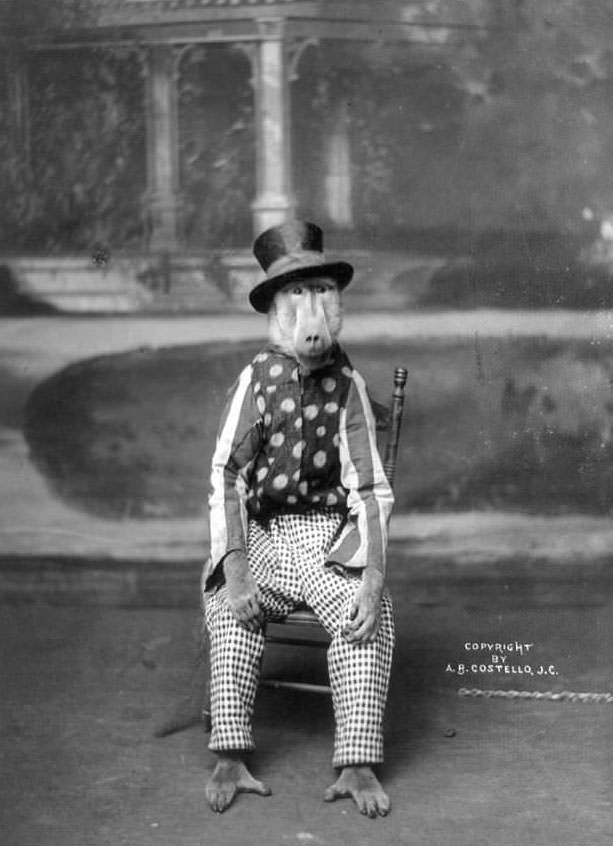
A baboon sits squarely on a simple chair, dressed up with theatrical confidence in a tall top hat, a bold polka-dot jacket, and checked trousers. The animal’s bare feet and long hands remain unmistakably its own, creating that odd, funny tension between costume and reality that makes viewers look twice. Behind the subject, a painted studio backdrop suggests an outdoor veranda or garden, the kind of stagey setting often used to sell a convincing “scene” in early photography.
Humor was a serious business in the early 1900s, and novelty portraits like this leaned into the era’s appetite for spectacle, circus-style entertainment, and postcard-ready curiosities. The careful wardrobe choices—formal hat above, patterned fabric below—turn the baboon into a parody of respectable society, as if it’s been invited to play at being a gentleman for the camera. Even without a known venue, the overall composition feels like a promotional studio session meant to amuse and surprise.
For modern readers searching for unusual historical photos, “Baboon dressed as a human, 1904” offers both comedy and a glimpse into how people once staged animals for entertainment and visual gag photography. The crisp contrast of the outfit against the soft background, plus the direct, almost puzzled gaze, gives the portrait a strangely memorable presence. It’s a small, quirky artifact of early twentieth-century popular culture—funny at first glance, then increasingly revealing the longer you linger.