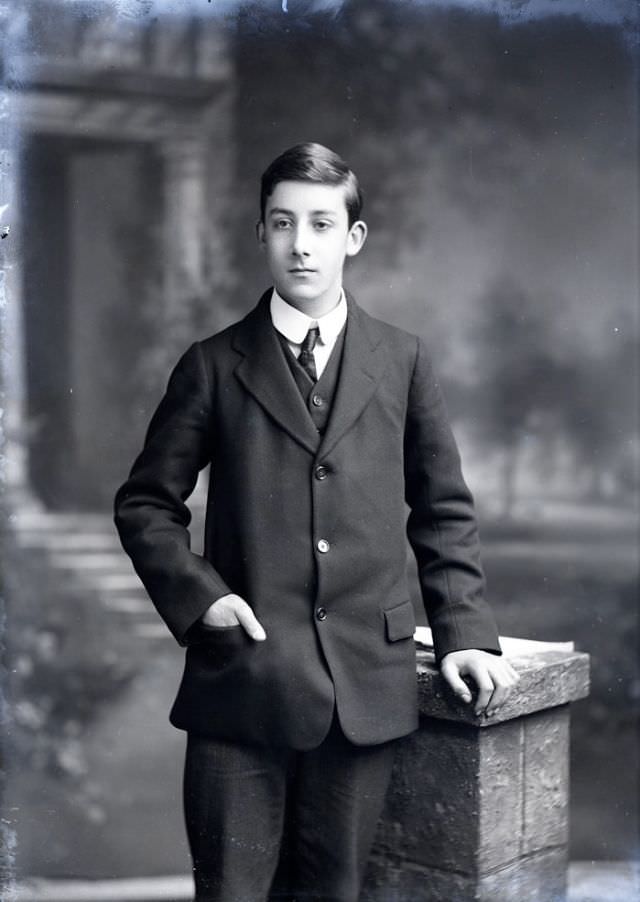
A teenage boy stands with quiet confidence in a studio portrait that speaks volumes about Edwardian-era youth fashion. His dark suit hangs neatly from the shoulders, the jacket buttoned high and tailored to a slim frame, while a crisp white collar and narrow tie draw the eye upward to his composed expression. Hair parted and smoothed into place, he embodies the period’s preference for polished presentation, even in the years between childhood and adulthood.
The details of the outfit suggest the layered formality that defined early-20th-century dress: a structured jacket over a matching vest, with trousers that fall straight and clean. One hand rests casually in a pocket while the other leans against a stone-like pedestal, a classic pose that photographers used to lend sitters an air of ease and refinement. Behind him, the softly painted architectural backdrop—blurred arches and steps—adds an Old World grandeur that complements the “dapper dude” aesthetic celebrated in Edwardian fashion and culture.
Beyond style, the portrait hints at the expectations placed on teenage boys at the time, when clothing often signaled discipline, respectability, and readiness for adult roles. Studio photography itself was a ritual of status and memory, capturing a carefully arranged version of modernity: well-cut suits, clean lines, and restrained elegance. For anyone exploring historical menswear, Edwardian fashion, or youth culture, this image offers a vivid snapshot of how sophistication was taught, worn, and preserved on glass and paper.