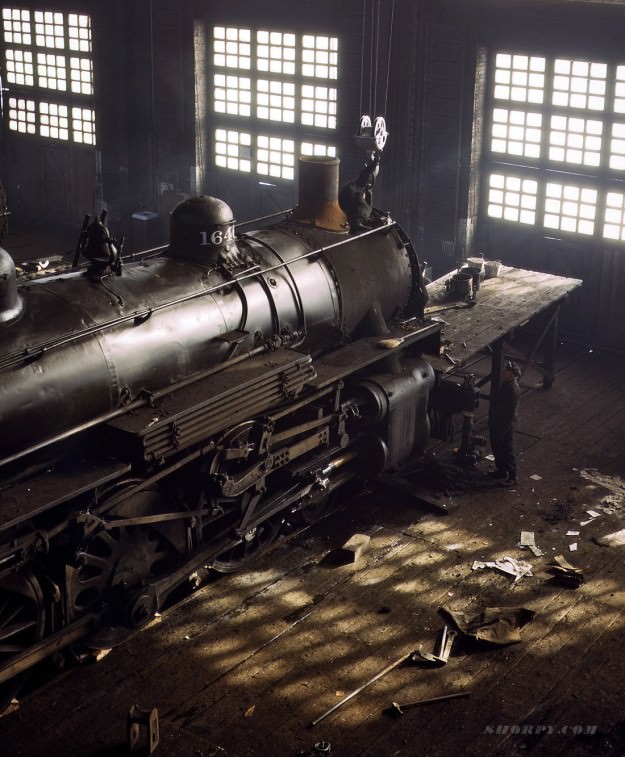
Warm winter light pours through tall, gridded windows at the 40th Street Shop of the Chicago & Northwestern R.R., turning soot and steam into a hazy glow around a waiting locomotive. The Kodachrome color gives the scene a lived-in realism—dark metal skin, dulled paint, and the quiet sheen of parts that have been handled and reheated countless times. Even without a crowd, the shop feels active, as if the engine has only paused mid-shift for the kind of attention that keeps rail service moving.
Alongside the boiler, a narrow work platform and bench suggest how close the maintenance crew worked to the machine’s mass, inch by inch. Scrap and paper litter the floor, and the heavy shadows emphasize the scale of the wheels and running gear below, where grime collects in every joint. Delano’s angle pulls the eye down the length of the locomotive, letting the viewer read the shop like a stage set—windows as footlights, the engine as the lead actor, and the tools as props waiting for the next cue.
December 1942 sits in the background of every detail, when railroad shops were essential links in the wartime supply chain and repair work had little room for waste. The title’s nod “back to the days of the blacksmith” fits the stripped-down toolkit mentioned—two hammers, a wrench, and a broom—because the scene is ultimately about skill more than equipment. For anyone searching railroad history, Jack Delano, or Chicago & Northwestern Railroad shop life, this photograph offers a richly textured look at industrial labor where muscle, judgment, and routine maintenance kept steel rolling.