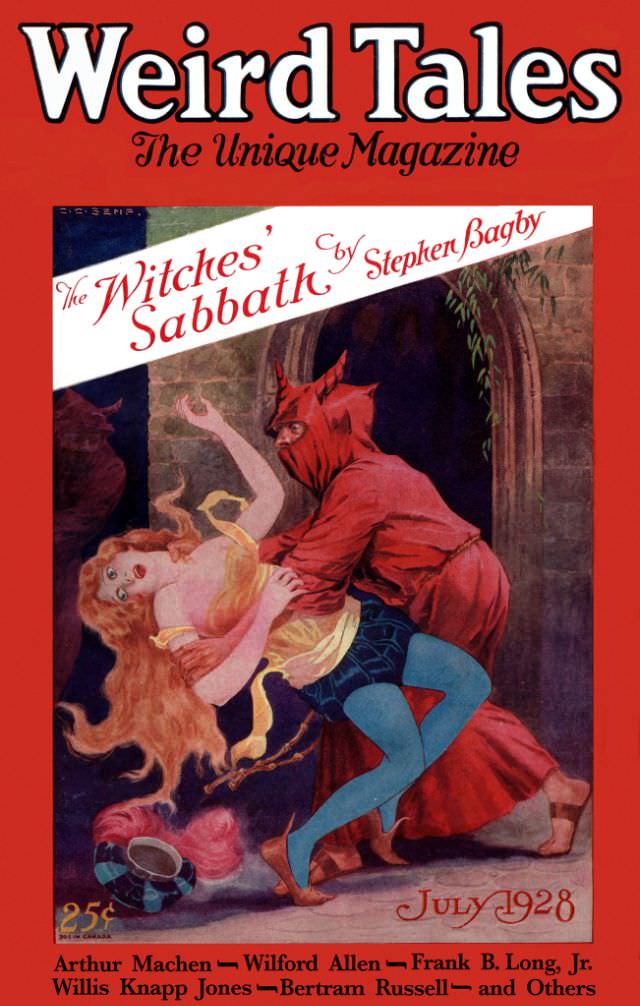
Bold red borders and towering white lettering announce *Weird Tales* as “The Unique Magazine,” and the July 1928 issue wastes no time plunging the reader into melodrama. A slashing diagonal banner promotes “The Witches’ Sabbath” by Stephen Bagby, an eye-catching bit of typography that feels like a poster pasted across the scene. Even the small price mark in the corner and the hand-drawn “July 1928” date serve as reminders that this was pulp—meant to be bought quickly, read eagerly, and traded afterward.
At the center, a devilish figure in a horned red hood looms over a swooning woman with flowing hair and a bright, gold-toned dress, their bodies caught in a tense, theatrical struggle. The setting hints at shadowed stonework and an arched doorway, with deep blues and blacks framing the figures so the reds and skin tones flare hotter. A scattered accessory near their feet and a curling wisp of smoke add to the sense of ritual, danger, and the lurid promise that made fantasy and horror magazine cover art so irresistible on a newsstand.
Collectors often prize covers like this not only for the stories inside, but for how clearly they convey an era’s taste for gothic thrills, occult suggestion, and heightened emotion. The bottom credits list a roster of contributors—Arthur Machen among them—linking the magazine’s sensational visuals to the broader web of weird fiction writers who fed the genre’s growing audience. As a piece of July 1928 ephemera, this *Weird Tales* cover remains a compact lesson in pulp marketing: dramatic scene, provocative title, and a pledge of uncanny entertainment for a quarter.