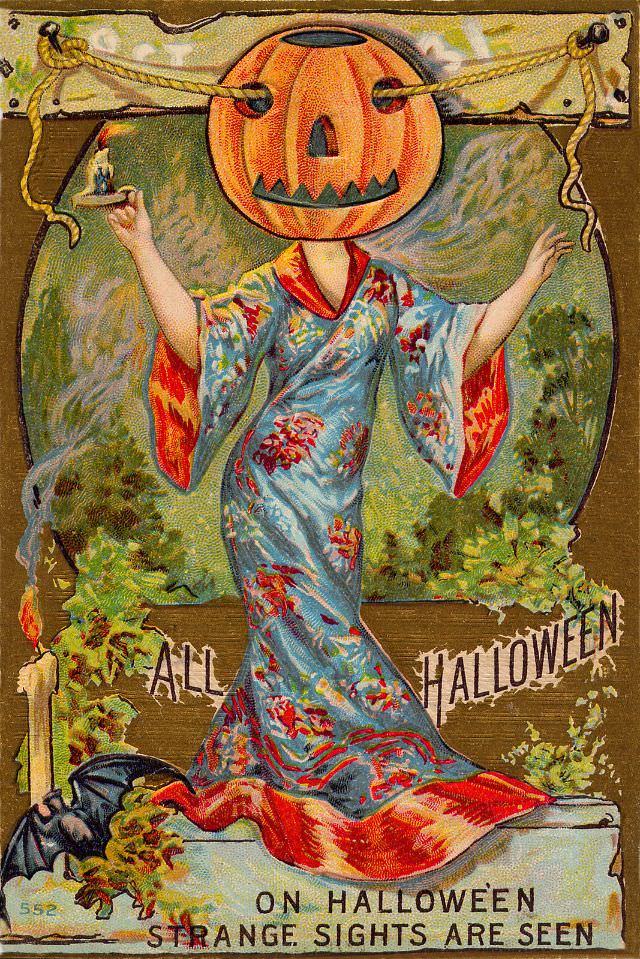
A grinning jack-o’-lantern replaces a dancer’s head in this whimsical cover art, turning a familiar Halloween symbol into a theatrical masquerade. Flowing robes patterned with bright floral motifs billow as the figure balances in a playful pose, one hand lifting a tiny candle for an extra flicker of mischief. The bold colors and painterly shading give the scene a storybook feel, perfectly suited to the title’s promise that on Hallowe’en, “strange sights are seen.”
Around the central character, curling ribbons, leafy garlands, and scattered candlelight build a stage-like frame that feels part parlor entertainment, part autumn ritual. The bat in the lower corner and the pumpkin’s carved eyes and jagged smile lean into classic Halloween imagery, while the costume itself adds a surprising elegance that softens the fright. Even the lettering, worked into the design like a banner on a set, reinforces the sensation of a seasonal performance.
As a historical Halloween illustration, the piece offers a glimpse into how earlier popular art mixed humor, glamour, and the uncanny to celebrate the holiday. It’s the kind of cover art that would have signaled October’s arrival at a glance—bright, odd, and inviting, with just enough eerie charm to delight. For collectors, historians, and Halloween enthusiasts alike, the image stands as a vivid reminder that festive weirdness has long been part of the tradition.