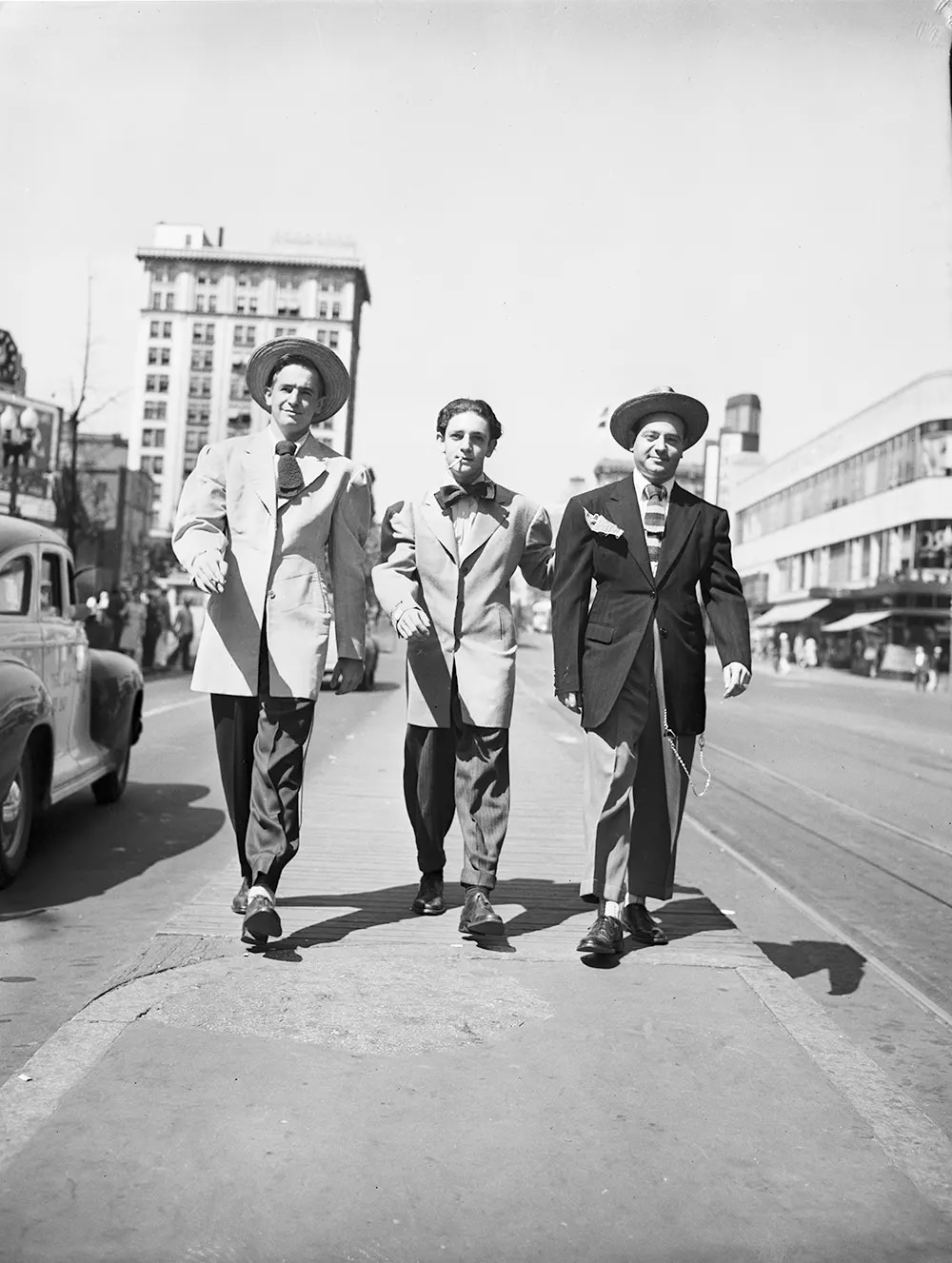
Three men stride toward the camera down a broad city sidewalk, wearing the unmistakable silhouette of zoot suits in 1946. Long jackets hang past the hips, trousers fall in roomy folds, and wide-brimmed hats crown the look, turning an ordinary street scene into a statement of style. Their confident posture reads like a public performance, as if fashion itself is the headline.
Details sharpen the story: a bold bow tie on the man in the center, a patterned tie and pocket square on the right, and sharply pressed lapels that catch the light. Parked cars line the curb, while tall commercial buildings and street-level storefronts recede behind them, grounding the scene in an urban postwar world. Even without a specific location named, the architecture and traffic create a recognizable mid-century American streetscape.
Zoot suit fashion carried more than flair; it signaled youth culture, music, and belonging at a moment when clothing could spark suspicion as easily as admiration. In the wake of the wartime controversies often linked to the Zoot Suit Riots, the ensemble still projected defiance and pride, refusing to shrink into postwar conformity. For readers searching fashion history, 1940s menswear, and the cultural meaning of zoot suits, this photograph offers a vivid glimpse of how style became identity on the street.