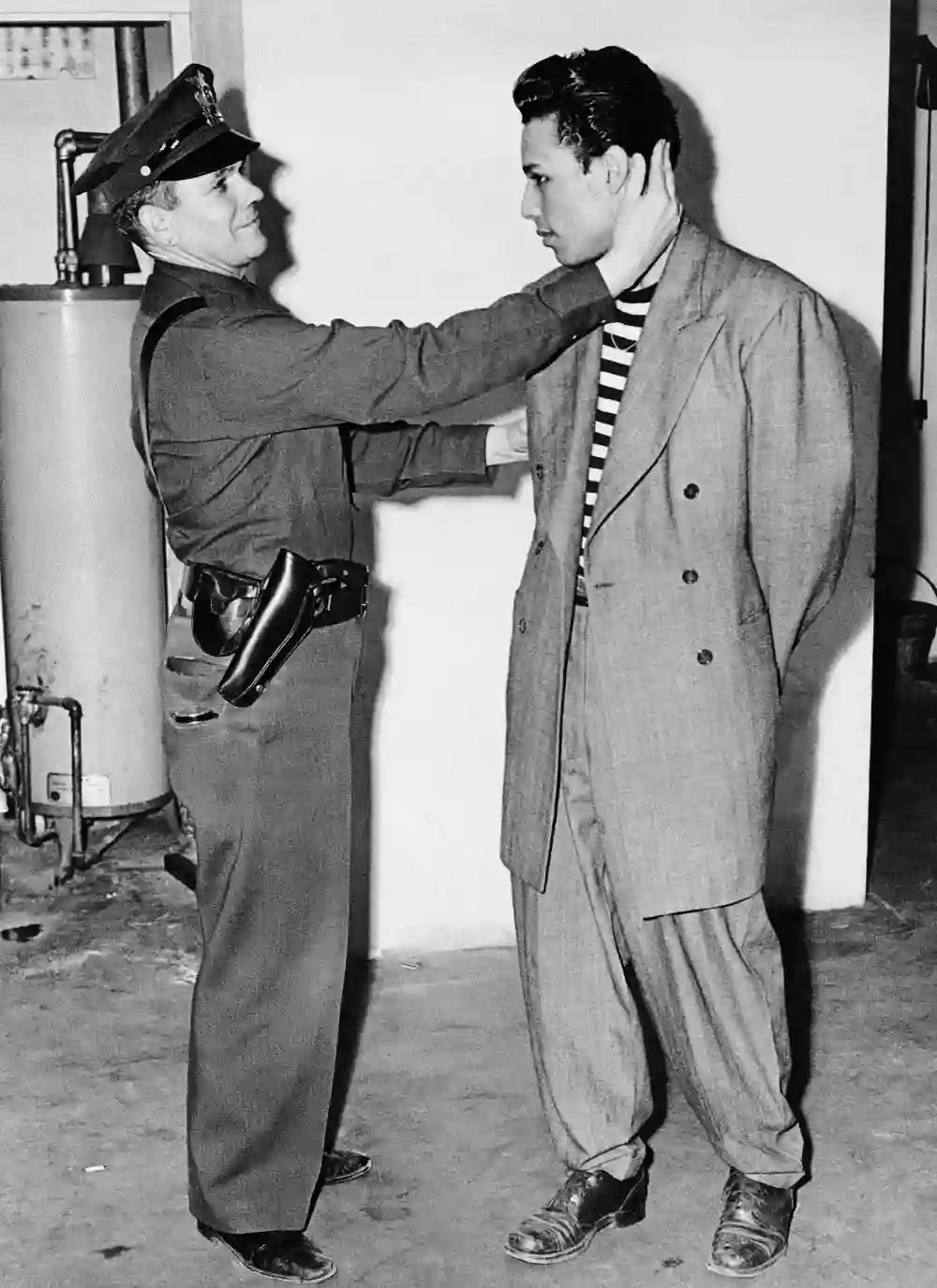
Under the stark light of an interior room, an LAPD officer conducts a close inspection of a young man dressed in a zoot suit, hands firm at the man’s jaw and collar as if checking for concealed items. The detainee stands rigidly, eyes turned to the side, his slicked hair and composed expression contrasting with the authority of the uniform beside him. Even in this straightforward arrest scene dated June 7, 1943, the camera lingers on clothing and posture—details that made the zoot suit instantly legible to the public as more than mere style.
The outfit itself tells a bigger story: an oversized double-breasted coat drapes over a striped shirt, paired with baggy, pleated trousers gathered at the ankle and worn with well-polished shoes. In wartime America, when fabric conservation was promoted and “excess” could be condemned as unpatriotic, the zoot suit became a lightning rod, celebrated by some as swagger and self-expression while criticized by others as provocation. That tension is palpable here, where fashion becomes evidence, and a body becomes a site of scrutiny.
June 1943 in Los Angeles sits in the shadow of the Zoot Suit Riots, when anxieties about youth culture, race, and public order exploded into violence and sweeping arrests. Photographs like this one helped fix a powerful association between zoot suits and criminality, even as many wearers saw the look as a claim to dignity, identity, and modern urban cool. For historians of fashion and culture, the image is a compact record of how policing, media, and clothing intersected—turning a tailored silhouette into a symbol of cultural conflict in wartime LA.