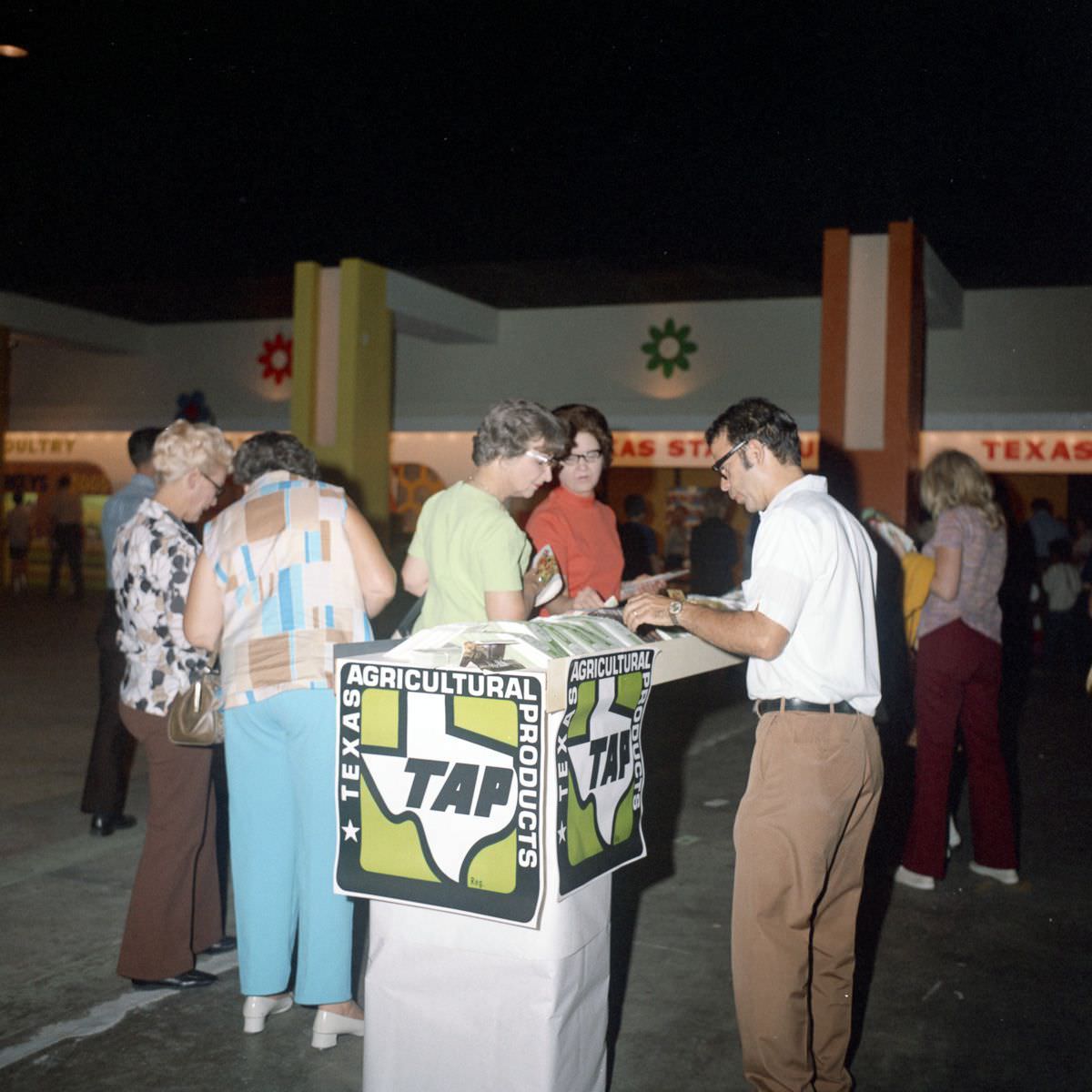
Beneath the high, dark ceiling of an indoor fair hall, a small crowd gathers around a waist-high display wrapped with bold “TAP” logos for Texas Agricultural Products. People lean in to examine pamphlets and papers, creating the unglamorous but essential backdrop of the Texas State Fair—information tables, promotional materials, and the steady flow of visitors moving from exhibit to exhibit.
The fashion details place the moment firmly in the early 1970s: sleeveless patterned tops, wide-leg slacks, sensible heels, and the era’s distinctive hairstyles and eyeglasses. Bright, graphic décor—tall colored columns and simple flower motifs—adds a cheerful, modern note that contrasts with the concrete floor and the practical purpose of the booth. In the background, partial signage for “TEXAS STATE…” and nearby sections hints at the fair’s sprawling mix of agriculture, food, and entertainment.
Pageantry like the crowning of “Miss Pecan Nuts” belonged to this same world, where local products and community pride were packaged into spectacle and tradition. Even without the stage in view, the image evokes the culture surrounding a 1972 Texas State Fair beauty pageant: sponsors, industry groups, and everyday fairgoers all sharing the same space. As a slice of Texas fair history, it captures how commerce, regional identity, and 1970s style mingled in the corridors just off the spotlight.