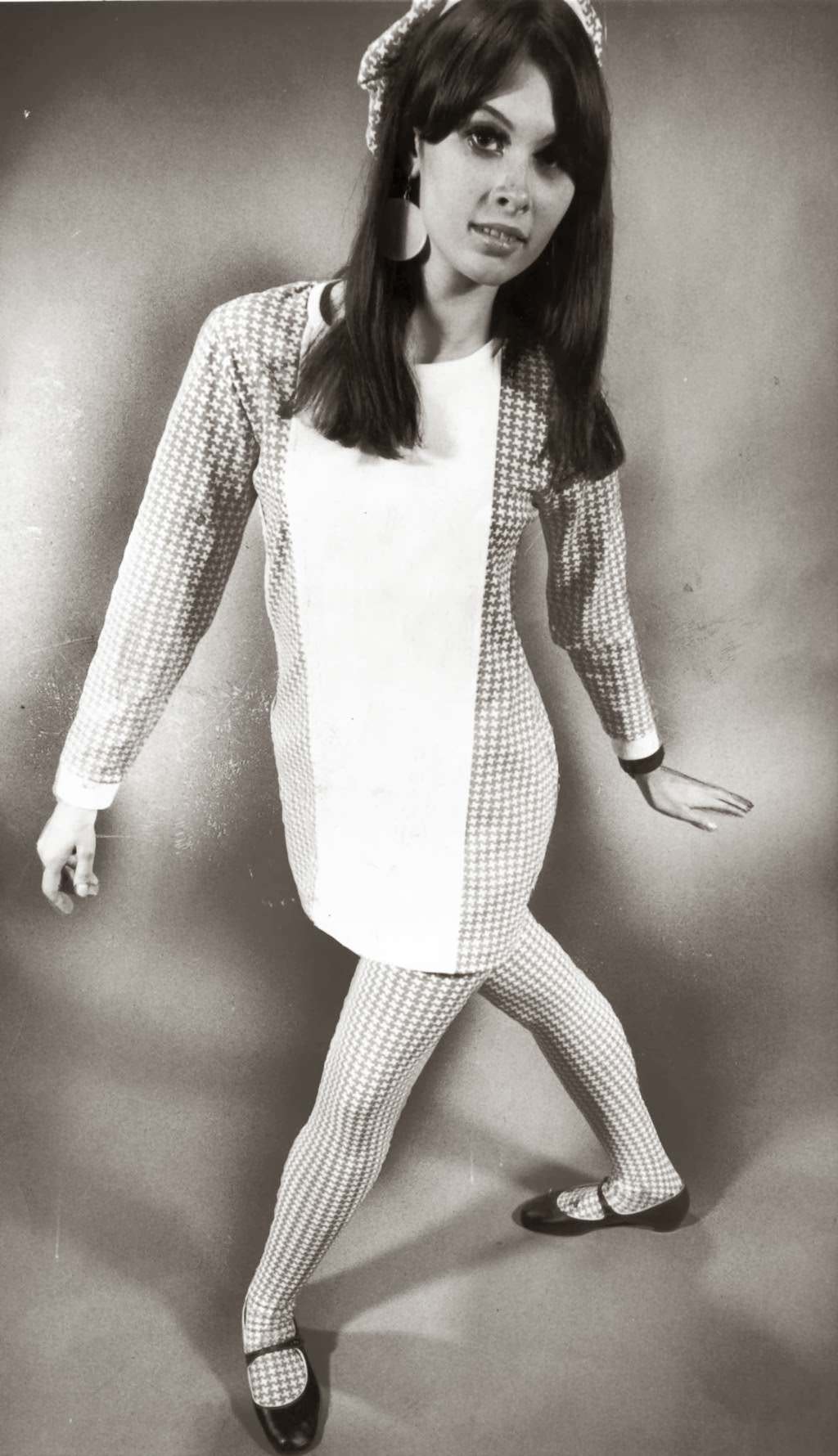
Lean, graphic, and unmistakably mid‑1960s, Ron Bailey’s Chicago Tribune fashion image spotlights a mod ensemble built around abstract houndstooth checks in stretch nylon. The model wears patterned tights paired with a long-sleeved tunic top that drops to mini length, its clean central panel setting off the busy print at the sides. A small matching cap and bold, oversized earrings complete the look, while low Mary Jane–style shoes keep the silhouette youthful and street-ready.
What makes the outfit feel so modern is its emphasis on line and motion: the “fencer-front” suggestion in the tunic’s design reads like sporty armor, turning everyday dressing into a kind of playful uniform. The tight, continuous pattern from torso to legs underscores how new synthetic fabrics were changing fashion—clothes could cling, stretch, and hold their shape, supporting the era’s love of streamlined geometry. Even in black and white, the contrast between solid paneling and allover checks delivers the punch that boutique fashion depended on.
Behind the styling lies a larger story about the miniskirt’s ascent and the way youth culture rewrote the rules of propriety, practicality, and price. The title’s mention of Cheetah boutique and the $20 tag hints at a retail world eager to translate runway ideas into attainable, attention-grabbing pieces for city shoppers. Filed under Fashion & Culture, this photograph serves as a vivid document of how 1960s mod fashion, nylon tights, and bold patterning helped define a decade determined to step beyond the knee.