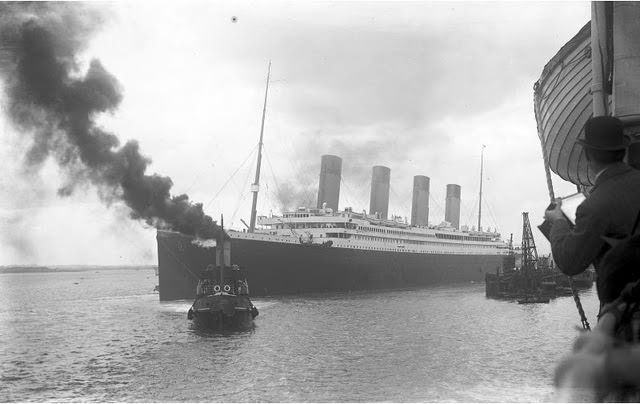
Smoke curls across the harbor as a small tug works the water ahead of a towering ocean liner, its four funnels and long white superstructure announcing a new scale of ambition in passenger travel. The view feels like a moment between workshop and legend—when the ship is no longer a set of riveted plates and steel frames, yet not quite the world-famous name it would become. For readers searching the story of Titanic construction, this photograph offers a powerful sense of proportion: human-sized craft and dockside figures dwarfed by an engineered giant.
Behind the romance of a grand departure lies an industrial achievement built on early-20th-century inventions and logistics. From the vast hull and the orderly tiers of decks to the infrastructure lining the water’s edge, everything speaks to modern shipbuilding: heavy cranes, coordinated crews, and the planning required to move a vessel of unprecedented size. Even without a labeled date or yard, the scene evokes the era’s confidence in technology and the marketing promise of “unsinkable” design that helped propel the ship to instant fame.
Viewed today, the photograph invites a closer look at how myth and machinery meet. It’s an ideal companion to a WordPress post about the Titanic’s rise to fame, balancing spectacle with the quieter details of maritime labor—tugs, smoke, and shoreline industry—doing the unglamorous work that made the ocean liner’s grandeur possible. As you explore the inventions and decisions behind the build, this image anchors the narrative in the real textures of the harbor, where steel dreams first touched open water.