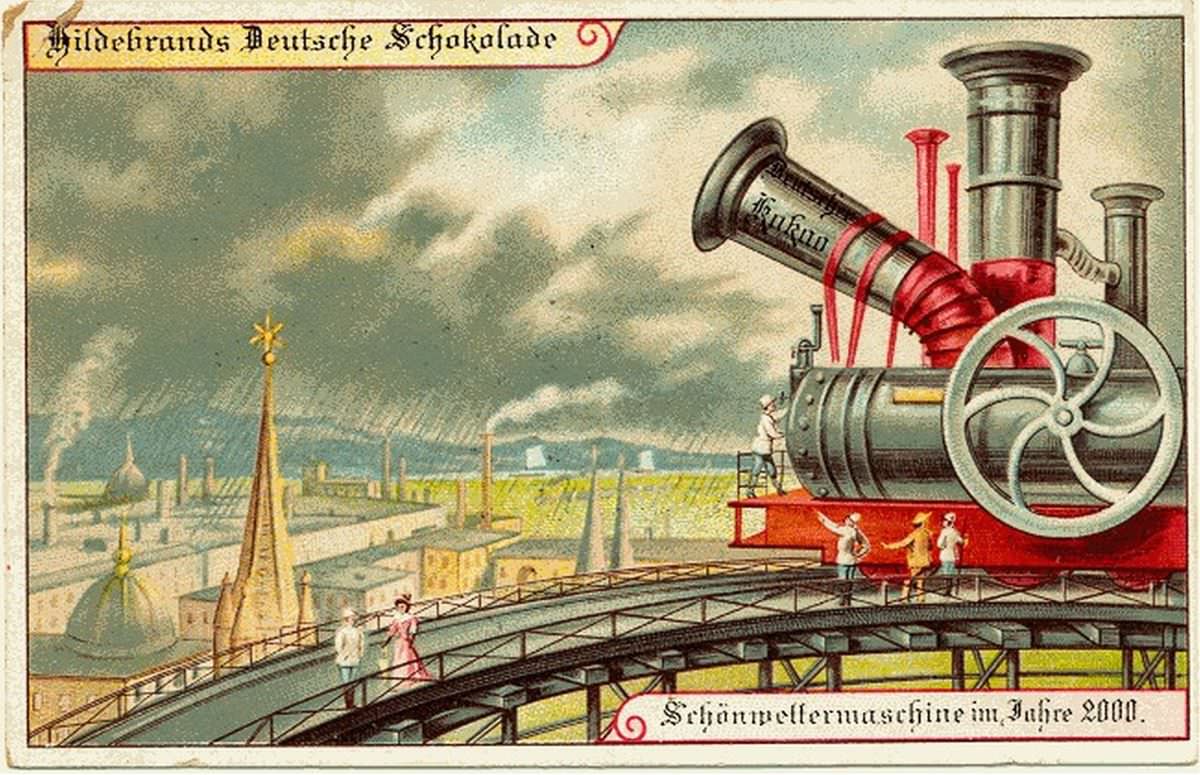
A hulking, pipe-laced contraption dominates a rooftop platform, its giant flywheel and smokestack-like tubes aimed toward a sky thick with dramatic clouds. Below, a city skyline with domes and spires stretches into the distance, while tiny figures in period dress stand as if proudly supervising the apparatus. Along the border, German text frames the scene like a playful promise: technology has grown bold enough to take on the heavens.
The humor works because it borrows the visual language of heavy industry—boilers, vents, and riveted metal—and applies it to something famously untamable. With a few turns of that wheel, the picture seems to suggest, storms could be summoned or dismissed on command, as casually as switching on a factory line. It’s the kind of optimistic satire that thrives where modernity meets everyday frustration, imagining a mechanical fix for rain, heat, and everything inconvenient in between.
“Weather-controlling machines” taps into a long-running fascination with climate control, cloud-making schemes, and the dream of perfect forecasts turned into perfect power. Whether read as a retro-futurist fantasy or an advertisement-style joke, the artwork captures the era’s faith in engineering and its willingness to exaggerate that faith for entertainment. For collectors of historical ephemera and fans of early science-fiction imagery, it’s a memorable glimpse of how people once pictured the future—loud, metallic, and confidently oversized.